Content
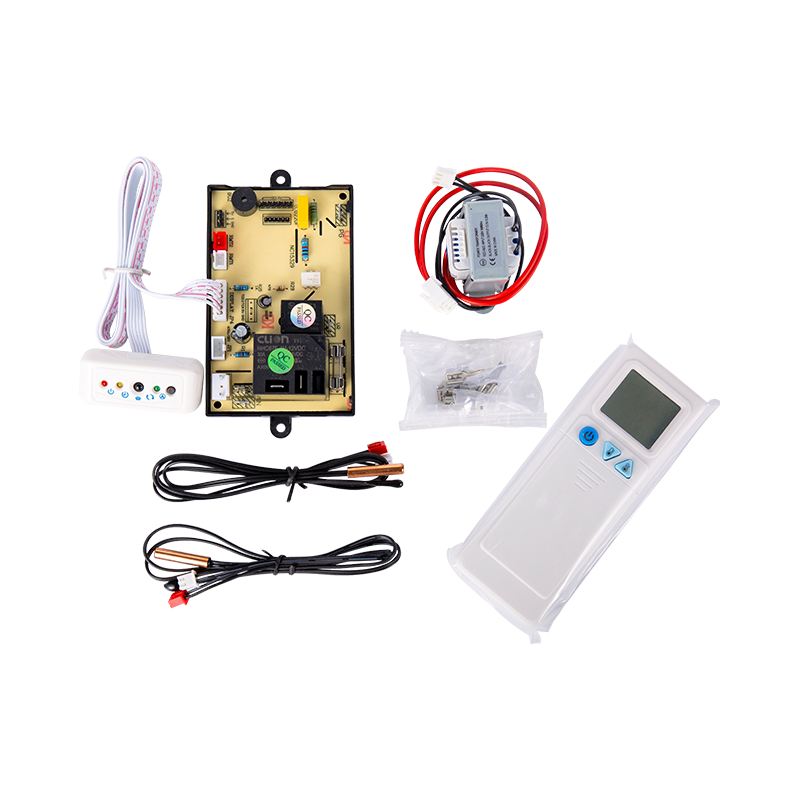
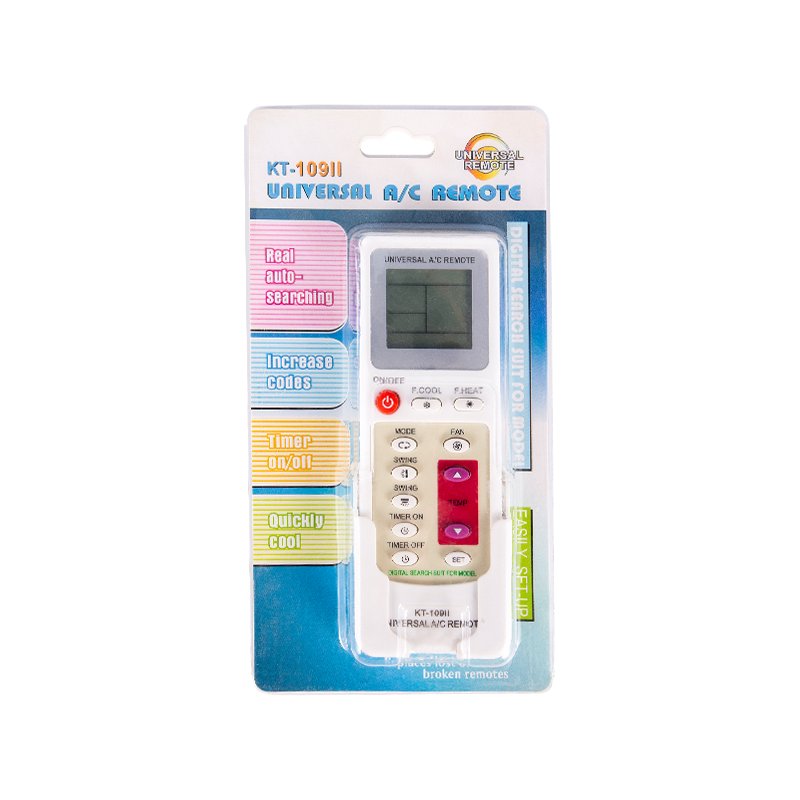
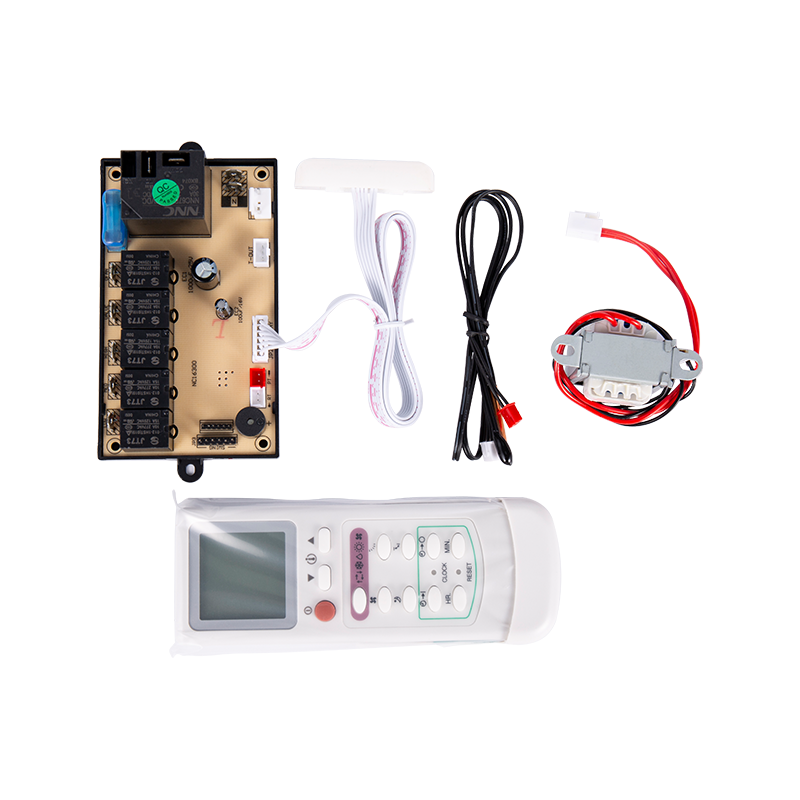
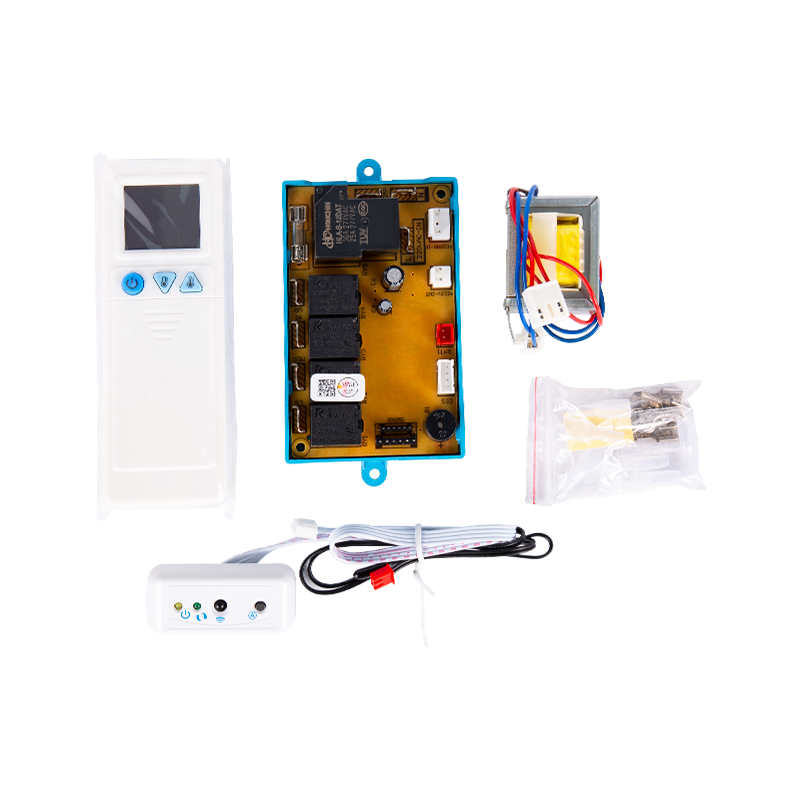
A Universal A/C Control System & Remote replaces brand-specific controllers with a single programmable unit capable of operating thousands of air conditioner models across manufacturers — from Daikin and Mitsubishi to LG, Carrier, and Gree. For installers, property managers, and homeowners dealing with lost, damaged, or discontinued OEM remotes, a universal control system is the fastest and most cost-effective path back to full AC functionality.
AC models supported by leading universal control systems
Dual signal protocols covering all major AC communication standards
Average auto-search programming time to identify AC brand code
OEM function coverage including swing, turbo, sleep, and timer modes
A universal AC control system works by storing a library of infrared signal codes — each uniquely matched to a specific brand and model of air conditioner — inside its onboard microcontroller memory. When activated, it transmits these pre-programmed IR signals through its emitter LED at the frequency and modulation pattern the target AC unit expects to receive from its original remote.
More advanced universal control boards extend this function beyond handheld remotes into full wall-panel and wired controller systems that replace the original indoor unit's complete control interface — including display, button inputs, and PCB communication to the AC mainboard.
The universal controller's ROM contains coded IR libraries for thousands of AC brands. Premium units store 2,000–6,000+ brand-model code sets covering split, cassette, window, and multi-zone systems.
During setup, the controller either auto-searches through codes until the AC responds, or the user enters a known brand code directly. The matched code set is stored in the controller's non-volatile memory.
On each button press, the microcontroller retrieves the corresponding command from the active code set and fires the IR LED at 38kHz carrier frequency — identical to the OEM remote signal the AC unit's receiver expects.
The AC's IR receiver demodulates the signal and executes the command. From the unit's perspective, the signal is indistinguishable from its original manufacturer remote — no firmware change or hardware modification is required on the AC side.
Universal AC remotes can safely replace original remotes in the vast majority of residential and light commercial installations. The AC unit's indoor receiver processes only the IR or RF signal pattern — it has no mechanism to detect or reject a non-OEM source. Safety in this context depends not on signal origin, but on whether the universal remote correctly replicates the command structure the AC's firmware expects.
A universal remote operates safely when the matched code set correctly encodes all commands — including setpoint limits, compressor protection delays, and defrost override logic — that the OEM remote enforces. Quality universal systems replicate full command sets, not just basic on/off and temperature functions.
The one area of caution applies to proprietary smart AC systems — units designed for app-only or Wi-Fi control where the original "remote" is a smartphone interface rather than an IR handset. These systems do not use IR receivers and cannot be controlled by any IR-based universal remote. For these units, a universal Wi-Fi AC control module (which intercepts the internal PCB communication protocol) is the correct replacement solution.
| AC Type | Universal IR Remote Compatible | Notes |
| Standard Split System | Yes — fully compatible | Covers 95%+ of residential installations |
| Cassette / Ceiling Unit | Yes — with correct code set | May require wired wall panel replacement for full function |
| Window / Portable AC | Yes — most models | Some window units use proprietary button encoding |
| Multi-Zone Systems | Partial — per indoor unit | Each indoor unit requires individual code matching |
| Wi-Fi / App-Only AC | No — IR not applicable | Requires universal Wi-Fi control module instead |
| VRF Commercial Systems | No — wired BMS protocol | Requires proprietary BMS interface module |
Universal AC control systems support two programming methods — auto-search and manual code entry. Auto-search is faster for unknown models; manual entry is more reliable when the brand code is already known from the included code booklet or manufacturer database.
Compatibility between a universal AC control system and a target air conditioner depends on four technical criteria — meeting all four ensures full-function operation rather than basic command-only control.
Non-response from the AC unit after programming is the most common issue users encounter with universal controllers. The cause is almost always one of four specific technical mismatches — not a fault in the universal controller itself.
The auto-search stopped on a partial code match — the AC responded to POWER but uses a different encoding for other commands. Solution: continue the auto-search past the first response to find a complete match, or try secondary codes listed for the brand in the manual.
The AC unit's IR receiver window is blocked by a filter cover, decorative panel, or accumulated dust. The receiver is typically located at the bottom-left of the indoor unit fascia. Clean the receiver lens and test with the remote aimed directly at it within 2 meters.
The brand is listed but the specific model sub-series uses a different signal encoding not included in the universal controller's library. Check the controller manufacturer's online code update tool — most leading brands push periodic library updates via PC or USB for registered users.
The indoor unit has an active fault code that locks out remote commands until the error is cleared. Check the AC's self-diagnostic LED blink pattern against the service manual error code table. Many units require a manual reset at the unit's onboard button before remote commands are accepted again.
Systematic troubleshooting isolates whether the problem is in the controller, the signal path, the AC receiver, or the code match — and resolves most issues without replacement hardware.
Point the controller's IR LED at a smartphone front camera and press any button. The camera sensor sees IR as a visible white flash — if no flash appears, the LED or battery is the fault source, not the code or signal protocol. Replace batteries with fresh alkaline cells and retest.
IR signal strength falls as the square of distance. Test with the remote within 1 meter and pointed directly at the receiver window at zero angle. Oblique angles reduce effective signal strength by 30–60% at the receiver aperture.
Strong ambient light sources — halogen downlights, direct sunlight through windows, and some LED strips operating at 38kHz flicker frequency — saturate the AC's IR receiver and block remote commands. Test with overhead lights off and direct sunlight blocked to isolate interference.
Clear the stored code by holding the SETUP button for 10 seconds until the LED flashes three times. Repeat the auto-search or manual entry process from the beginning. A corrupt code register (caused by battery removal during active programming) produces intermittent or non-functional command behavior.
Download the latest code library update from the controller manufacturer's support portal. Models released in the past 12–24 months may not be in the pre-loaded library but are added through firmware updates. Connect via USB or the update tool provided and install the latest version before re-attempting auto-search.
If a second IR device — a phone with IR blaster running an AC control app — also fails to control the unit, the fault is in the AC's IR receiver board rather than the universal controller. The receiver module on most split system indoor units is a replaceable sub-component available as a spare part from the AC manufacturer.
Whether replacing a lost OEM remote, upgrading a multi-unit property to standardized control, or restoring functionality to a discontinued model, the right Universal A/C Control System & Remote delivers full-function compatibility without hardware modification to the air conditioner — backed by a code library spanning thousands of models across every major brand.
Efficient charging, stable output, capacitor, thefirst choice for electric drive.
If you have anything to consult, you canfollow us, we will contact you as soon aspossible

Copyright © Ningguo Kingcool Import and Export Co., Ltd All Rights Reserved. Custom HVAC Parts & Accessories Suppliers