




Ningguo Kingcool Import and Export Co., Ltd is a China-based supplier of air conditioner fans and DC cross flow fans, operating as an industry-and-trade enterprise with a one-stop appliance parts programme. Our fan range covers DC cross flow (tangential) blowers and axial fans for air conditioning, refrigeration and ventilation assemblies, supplied alongside the wider Air-Conditioner Parts family we distribute.
We build our fan business around configuration rather than catalogue-only selling. Blade geometry, motor voltage, speed-control interface, bearing type and connector are matched to the host unit, and we support sample orders before volume production so the fan behaves correctly inside the finished appliance.
Air Conditioner Fan, DC Cross Flow Fan Manufacturers: What We Supply
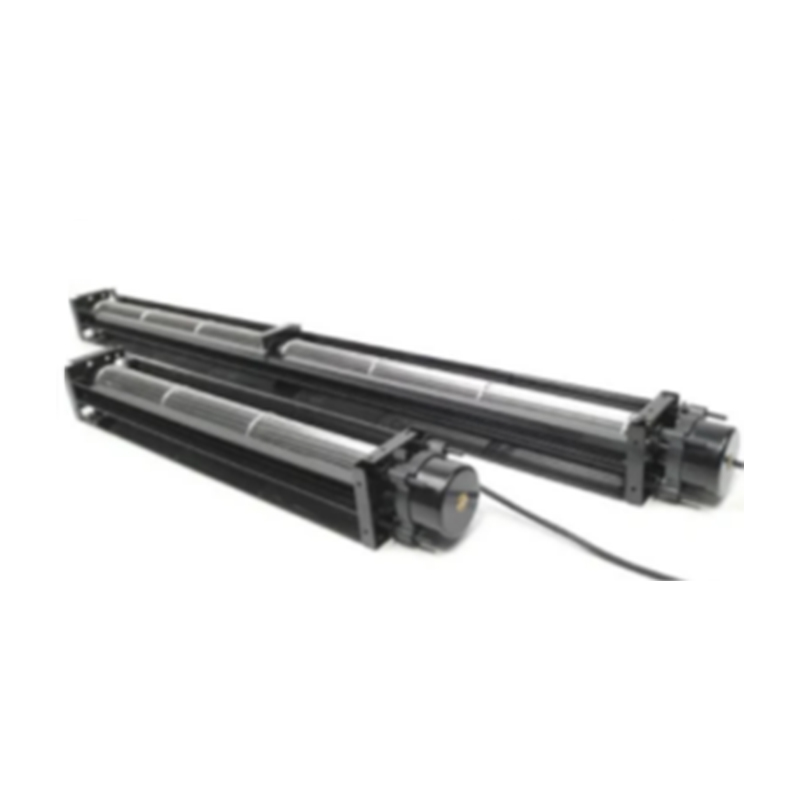
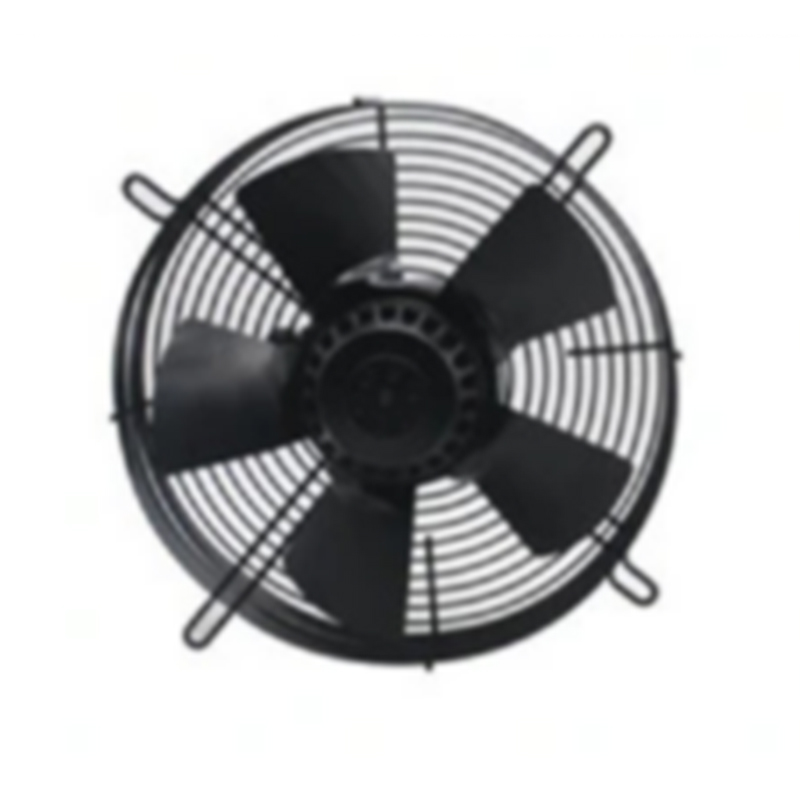
As Air Conditioner Fan, DC Cross Flow Fan Manufacturers, our core fan offer is built around two product families that serve different airflow duties inside HVAC equipment. Cross flow fans move air parallel to the heat exchanger face, which suits split indoor units, fan coil units, air curtains and slim ducted products where a wide, even discharge is required. Axial fans move air along the shaft axis and suit condenser-side cooling, cabinet ventilation and general heat dissipation.
- DC cross flow fans — 12V and 24V versions with PWM and 0–10V speed control for HVAC applications.
- Axial fans — AC and DC axial units for air conditioner and refrigeration cooling duties.
- Custom fan builds — impeller length, blade profile, lead length and connector configured to customer requirements.
Because we also supply compressors, capacitors, motors, controls and installation materials, a fan requirement can be quoted together with the surrounding parts in a single shipment. That is the practical value of our one-stop procurement model for distributors and service networks.
Product Range and Application Fit
The table below maps our fan types to the equipment they typically serve, so a project engineer can identify the right starting point before we confirm dimensions.
| Fan Type | Typical Voltage / Control | Application Fit | Key Selection Data |
|---|---|---|---|
| DC cross flow fan | 12V / 24V DC, PWM or 0–10V | Split indoor units, fan coils, air curtains, slim ducted units | Impeller length, airflow, static pressure, speed signal |
| AC axial fan | 220V AC, fixed speed | Condenser cooling, control cabinet ventilation, general heat dissipation | Frame size, airflow, noise, mounting hole pattern |
| DC axial fan | 12V / 24V DC | Refrigeration cabinets, electronics cooling, compact HVAC enclosures | Voltage, current draw, bearing type, connector |
| Customised fan assembly | Per specification | OEM replacement programmes, private-label parts | Drawing, sample, target performance point |
Cross Flow Fan Engineering: Where the Design Decides Performance
A cross flow fan is not a drop-in commodity. The impeller length, blade count, blade angle and housing gap together determine the airflow-versus-static-pressure curve, and that curve has to sit correctly against the coil and filter resistance of the host unit. We work from the required working point rather than from a single airflow figure.
- Airflow and static pressure — the operating point at the unit's real restriction, not free-air delivery.
- Impeller length and diameter — matched to the coil width and cabinet opening.
- Motor and bearing — sleeve or ball bearing selection affects noise, life and mounting orientation.
- Speed control — PWM or 0–10V input with tachometer feedback where the controller needs closed-loop confirmation.
- Noise and vibration — balance quality and mounting isolation influence perceived sound in indoor units.
For DC cross flow units, the drive electronics are part of the fan assembly. We confirm the control interface against the host board so the fan responds correctly to the speed command and reports status in the way the controller expects.
Materials, Mechanical Fit and Installation
Fan assemblies are supplied with the mechanical interface defined by the host appliance: mounting brackets, end caps, shaft ends and fixing points. Installation is normally a matter of seating the fan in its housing, securing the bracket, and connecting the lead and plug to the unit harness.
- Impeller and housing materials selected for the operating environment of the appliance.
- Lead length, wire gauge and connector type specified to match the production harness.
- Mounting orientation confirmed, since bearing type and lubrication behaviour depend on it.
- Clearance to the coil, drain pan and cabinet wall checked to avoid contact and noise.
Where a fan replaces an existing part in a service or OEM programme, we compare the original sample against the proposed unit on dimensions, connector and control behaviour before release.
Quality Control and Acceptance
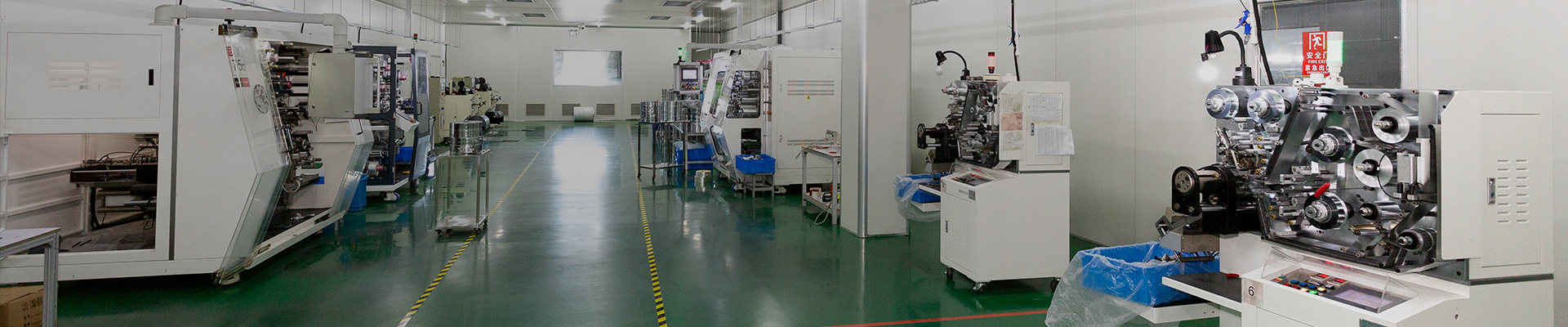
Our company operates with advanced production and testing equipment, and our capacitor manufacturing line runs with real-time monitoring during production. The same discipline of incoming inspection, in-process checks and outgoing verification applies to the fan and appliance parts we supply.
- Dimensional and fit checks against the approved drawing or sample.
- Electrical checks on voltage, current and speed-control response.
- Running test for noise, vibration and rotational stability.
- Pre-shipment inspection with the agreed sampling plan and documentation.
Acceptance criteria are agreed before production, so the inspection result at shipment matches the specification the project was quoted against.
Related Parts in the Same Procurement Programme
Fan replacement rarely happens in isolation. Distributors and service organisations typically order fans together with the electrical and refrigeration parts that fail in the same service window. Our wider range covers:
- Indoor And Outdoor Air Conditioning Motor for fan and blower drive duties.
- Compressor units for air conditioning and refrigeration systems.
- Axial Fan units for refrigeration and condenser cooling.
Consolidating these items reduces the number of shipments and inspection points a distributor has to manage, which is the reason our one-stop appliance parts model exists.
Information We Use to Configure Your Solution
To quote a fan accurately we need the working conditions, not just a part number. The following inputs let us propose a configuration and confirm it against a sample.
- Host equipment type and the airflow duty the fan performs.
- Required airflow and static pressure at the operating point.
- Supply voltage and the speed-control interface (PWM, 0–10V, fixed speed).
- Available mounting space, impeller length and fixing pattern.
- Connector type, lead length and harness arrangement.
- Noise target and operating environment.
- Annual quantity, packaging requirement and delivery destination.
Sample lead time is typically 1–5 days, with volume production quoted at 7–20 days depending on configuration and quantity. We confirm the schedule in writing with the quotation.
Frequently Asked Questions
What is the difference between a cross flow fan and an axial fan?
A cross flow fan draws air in around the impeller and discharges it parallel to the heat exchanger face, producing a wide, even air curtain — the reason it is used in split indoor units and fan coils. An axial fan moves air along its shaft axis and is used where a concentrated flow through a condenser or cabinet is required. We supply both types and will recommend the correct one from the equipment layout.
Can the DC cross flow fan be speed-controlled from our own controller?
Yes. Our 12V and 24V DC cross flow fans are available with PWM and 0–10V speed control for HVAC applications. We confirm the control voltage range, signal type and any tachometer feedback against your board specification before production, so the fan responds correctly to the speed command issued by the unit controller.
Do you supply customised fans rather than standard models only?
We configure fans to customer requirements, including impeller length, blade profile, lead length and connector. For OEM and replacement programmes we work from a drawing or a physical sample, produce a sample unit for approval, and then release volume production against the approved configuration.
What is the sample and production lead time?
Sample orders are typically prepared in 1–5 days. Volume production is generally quoted at 7–20 days, depending on the configuration, quantity and packaging requirement. The confirmed schedule is stated in the quotation so it can be planned into your production or distribution calendar.
Can fans be ordered together with other air conditioner parts?
Yes. Fans are part of our broader Air-Conditioner Parts range, which also includes motors, compressors, capacitors and controls. Distributors and service networks can consolidate a mixed order into one shipment, which simplifies receiving, inspection and stock handling.
How do we start a fan requirement with Kingcool?
Send the host equipment details, required airflow and static pressure, supply voltage, control interface, mounting dimensions and target quantity. We will review the working point, propose a fan configuration, and confirm the specification, sample plan and delivery schedule in a written quotation.

