

 EN
 English
 Français
 Español
 عربى


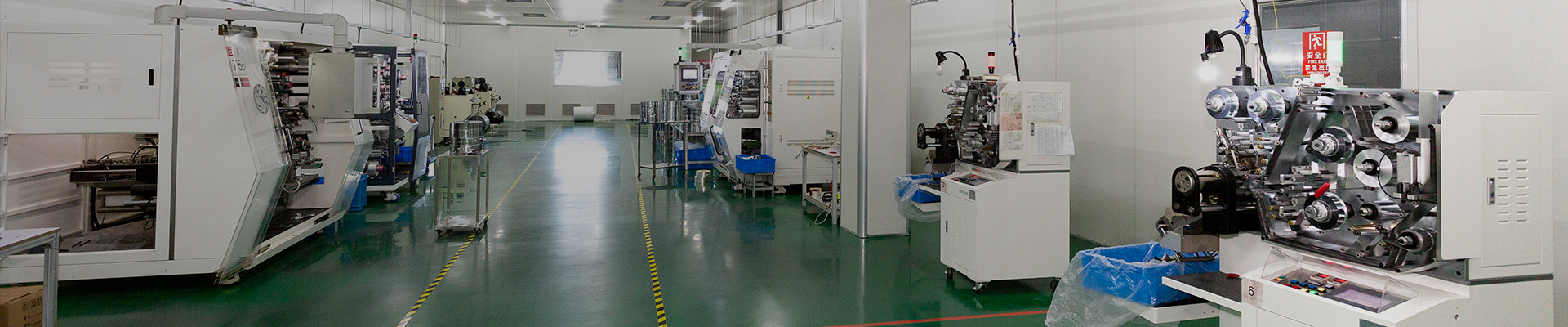
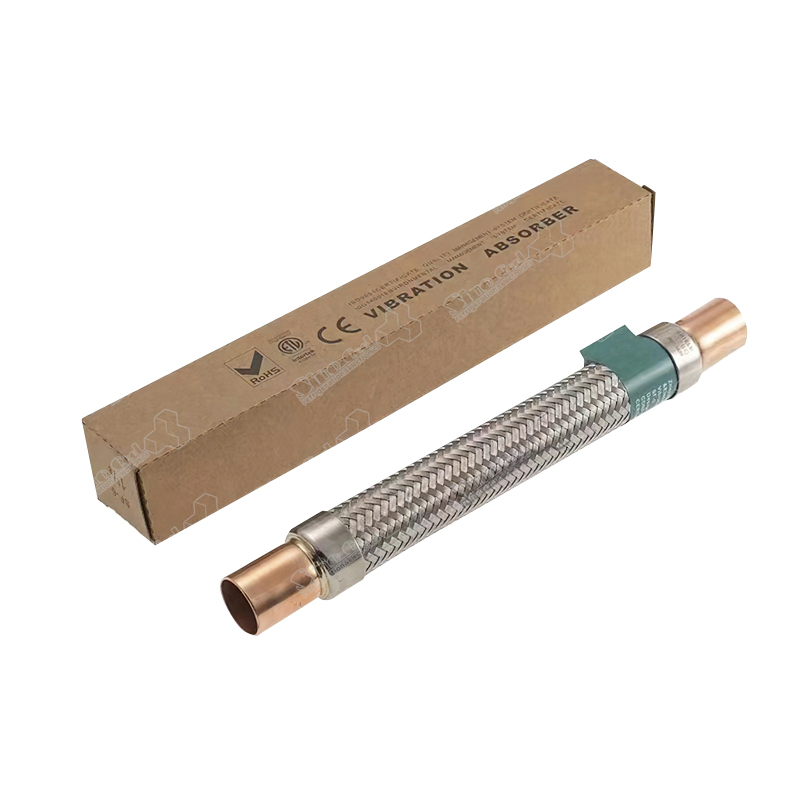


Ningguo Kingcool Import and Export Co., Ltd is a China-based supplier of HVAC and refrigeration parts, combining industry and trade with in-house production of metalized polypropylene film capacitors and a broad agency range of air conditioner, refrigerator and refrigeration accessories. Within the refrigeration parts family, our Vibration Absorber range covers the flexible link installed between the compressor discharge or suction line and the fixed pipework of a refrigeration circuit.
The absorber is a small component with a large effect on system reliability: it decouples compressor-induced pulsation and mechanical vibration from the copper tube network, reducing fatigue cracking at brazed joints, bracket wear and structure-borne noise. Our range is supplied as part of a one-stop appliance and refrigeration parts programme, so a single order can combine absorbers with copper fittings, filter driers, control valves and installation materials.
What Our Vibration Absorber Range Covers
As a Refrigeration Parts-Vibration Absorber Manufacturers, we match product configuration to the application, operating limits, interfaces and acceptance criteria defined for each project.
Refrigeration vibration absorbers are flexible, pressure-tight elements that carry refrigerant while allowing controlled movement. They are used on condensing units, condensing unit packages, cold room systems, transport refrigeration, commercial display cabinets and air conditioning equipment where the compressor is rigidly mounted and the tube run is long or complex.
Our supply position in this category is as a refrigeration parts manufacturer and supplier working alongside our capacitor production and our air conditioner and refrigerator accessory agency. That means the absorber is quoted in the context of the whole circuit — connection sizes, refrigerant, working pressure and the fittings that sit either side of it — rather than as an isolated rubber part.
Construction Types We Supply
- Rubber bellows absorbers — moulded elastomer body with reinforcing cord, used where flexibility and cost efficiency matter on suction and discharge lines.
- Braided flexible hose absorbers — corrugated stainless steel core with a stainless braid, chosen for higher pressure duty and longer service life on discharge lines.
- Copper or brass end fittings — plain copper tube ends for brazing, or threaded and flared connections where a serviceable joint is required.
- Straight and elbow configurations — to follow the routing of the existing tube run without adding unnecessary bends.
- Matched installation accessories — brass and copper fittings, copper tube, insulation tube and mounting hardware from the same refrigeration parts programme.
Where Each Type Fits in the Circuit
| Absorber Type | Typical Position | Selection Focus |
|---|---|---|
| Rubber bellows, straight | Compressor suction line, close to the shell | Bore matching tube OD, elastomer grade, length for movement |
| Rubber bellows, elbow | Tight cabinet layouts where the run turns immediately | Bend radius, clearance to panels, brazing access |
| Braided stainless hose | Discharge line, higher pressure and temperature duty | Working pressure, temperature range, end fitting type |
| Threaded or flared assembly | Field-serviceable joints and retrofit work | Thread standard, sealing method, torque limits |
| Absorber plus fittings kit | Installation packages and spare-part stock | Complete bill of materials, packing and labelling |
Critical Specifications for a Correct Match
Vibration absorber selection is driven by the tube it replaces, not by a single generic size. The following parameters define whether an absorber will fit, seal and survive the duty cycle.
- Nominal bore and tube outside diameter — the absorber must match the copper line it interrupts, typically expressed in inches or millimetres.
- Overall length and free length — determines how much axial, lateral and angular movement the assembly can absorb without stressing the braze.
- End connection — plain copper for brazing, or threaded, flared and flange options for serviceable joints.
- Working pressure and burst margin — discharge-side absorbers see the highest pressure and must be rated for the refrigerant and operating envelope.
- Temperature range — discharge gas temperature and ambient conditions govern elastomer or braid selection.
- Refrigerant and oil compatibility — the wetted materials must suit the refrigerant in use and the lubricant circulating with it.
- Elastomer or braid grade — resistance to ageing, ozone, oil and vibration fatigue over the expected service life.
- Orientation and support — vertical or horizontal installation, and whether additional tube clamping is required.
Application Fit Across Refrigeration and HVAC Equipment
Our absorbers are specified into equipment where compressor vibration would otherwise be transmitted into long or lightly supported tube runs. Typical applications include condensing units and condensing unit packages, cold storage and walk-in rooms, commercial refrigerated display, transport refrigeration, and split or packaged air conditioning systems.
Because the same project usually needs more than one component, the absorber is quoted alongside the surrounding circuit parts. A cold room package may combine absorbers with Refrigeration Parts such as filter driers, oil separators, copper tube, control valves and manifold gauges, while an air conditioning build may pair them with compressors, contactors and control components.
Related Range for Complete Circuits
- Compressor — the vibration source the absorber is matched to, including rotary and scroll types.
- Filter Drier For Refrigerator — moisture and contaminant control on the liquid line.
- Refrigeration Parts — copper fittings, installation material, condensate drain pumps and control valves for the full assembly.
Installation, Commissioning and Serviceability
An absorber performs only when it is installed without pre-load. The assembly should be brazed or tightened with the tube in its natural position, so the flexible element is neither stretched nor compressed at rest. Purge with dry nitrogen during brazing to prevent internal oxidation, and protect the elastomer or braid from direct flame.
- Support the tube run on both sides so the absorber absorbs movement rather than carrying pipe weight.
- Keep the absorber clear of sharp edges, panels and moving parts across the full travel of the compressor.
- Leak-test the joint after brazing as part of the normal evacuation and charging procedure.
- Inspect the flexible element during routine service for cracking, swelling, braid abrasion or oil staining.
- Replace rather than re-braze a suspect absorber; repeated heat cycles degrade the elastomer.
Quality Approach and Order Documentation
Our capacitor production runs on high-precision slitting and winding equipment with in-process testing, and the same discipline of dimensional control and inspection applies to the parts we source and supply. Absorbers are checked for bore, length, end connection and visual condition before packing, and orders are documented with the agreed specification so repeat shipments match the original.
For project work we prepare a written specification sheet covering the selected type, dimensions, connection style, material and quantity, together with packing and marking requirements. Where a customer works to an internal standard or an OEM part number, we map that reference to the equivalent absorber in our range before quotation.
Information We Use to Configure Your Solution
To quote an absorber that fits first time, we work from the circuit data rather than a photograph alone. The table below shows the inputs that most directly affect the selection.
| Project Input | Why We Need It |
|---|---|
| Tube outside diameter and wall | Sets the bore and end-fitting size |
| Line position (suction or discharge) | Determines pressure and temperature rating |
| Refrigerant and lubricant | Confirms wetted-material compatibility |
| Available length and routing | Fixes overall length, straight or elbow body |
| Connection preference | Brazed, threaded or flared end configuration |
| Equipment type and compressor model | Matches vibration duty and movement range |
| Quantity, packing and marking | Defines carton configuration and delivery scope |
| OEM or internal part reference | Cross-references to the equivalent item in our range |
Frequently Asked Questions
What sizes of refrigeration vibration absorber can Kingcool supply?
We supply absorbers across the common copper tube sizes used in refrigeration and air conditioning circuits, in straight and elbow bodies, with plain copper ends for brazing or threaded and flared connections. Send the tube outside diameter, line position and available length and we will confirm the matching item.
Should I choose a rubber bellows or a braided stainless hose?
Rubber bellows absorbers suit suction lines and general cabinet work where flexibility and cost efficiency are the priorities. Braided stainless hose is the better choice on discharge lines and higher-pressure duty, where temperature and pressure cycling are more severe. We confirm the selection against your working pressure and temperature range.
Can absorbers be ordered together with the rest of the circuit parts?
Yes. The absorber sits inside our wider refrigeration parts programme, so it can be combined with copper fittings, copper tube, filter driers, oil separators, control valves, insulation tube and installation material in a single order. This reduces the number of separate shipments a project has to manage.
How do you handle an OEM part number or an existing sample?
We map the OEM or internal reference to the equivalent absorber in our range and confirm dimensions, connection style and material before quotation. Where a physical sample is available, key dimensions can be verified against it so the replacement matches the original installation.
What information should accompany an absorber enquiry?
Tube outside diameter, suction or discharge position, refrigerant and lubricant, available length and routing, connection preference, equipment type, required quantity and any packing or marking instructions. With those details we can prepare a configuration and quotation without a round of clarification.

