




Ningguo Kingcool Import and Export Co., Ltd supplies Vacuum Pump & Refrigerant Recovery Unit & Scale manufacturer packages for HVAC/R service companies, appliance factories and refrigeration workshops. Our range covers rotary vane vacuum pumps, refrigerant recovery and recycling machines, and high-precision electronic charging scales, supported by matched motor-run capacitors, manifold gauges, hoses and oil separators from our one-stop appliance parts inventory.
What We Supply in This Category
As a Refrigeration Parts-Vacuum Pump & Refrigerant Recovery Unit & Scale Manufacturers, we match product configuration to the application, operating limits, interfaces and acceptance criteria defined for each project.
We are an industry-and-trade enterprise whose core manufacturing is metalized polypropylene film capacitors, with an annual capacity of 10 million pieces. That capacitor base gives us direct control over the motor-run and start capacitors used inside vacuum pump and recovery unit motors. Around that core, we have developed into an agent for air conditioner and refrigerator accessories, offering a complete range of refrigeration service equipment and consumables.
Our vacuum pump, recovery unit and scale range is built for field service and production-line evacuation. We stock the models most commonly requested by distributors and service networks, and we configure complete kits so that a single order covers the pump, the recovery machine, the scale, the hoses and the electrical protection components.
Product Range and Application Fit
| Product Type | Typical Models | Application Fit | Key Specification Focus |
|---|---|---|---|
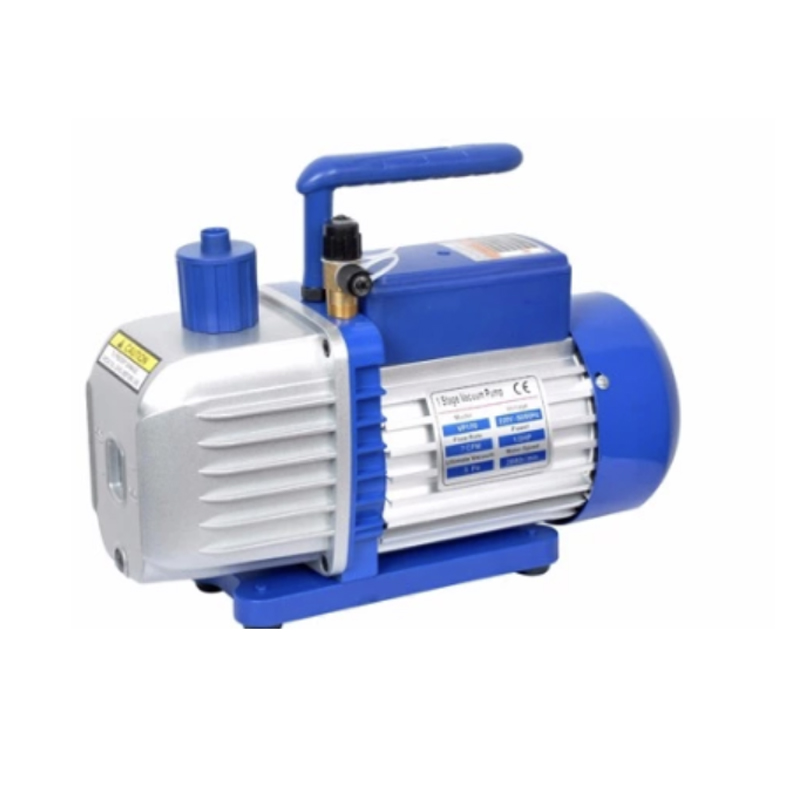
| Rotary vane vacuum pump | VP235 | Evacuation of split A/C, refrigerators, cold room and light commercial systems | Ultimate vacuum, pumping speed, oil capacity, gas ballast |
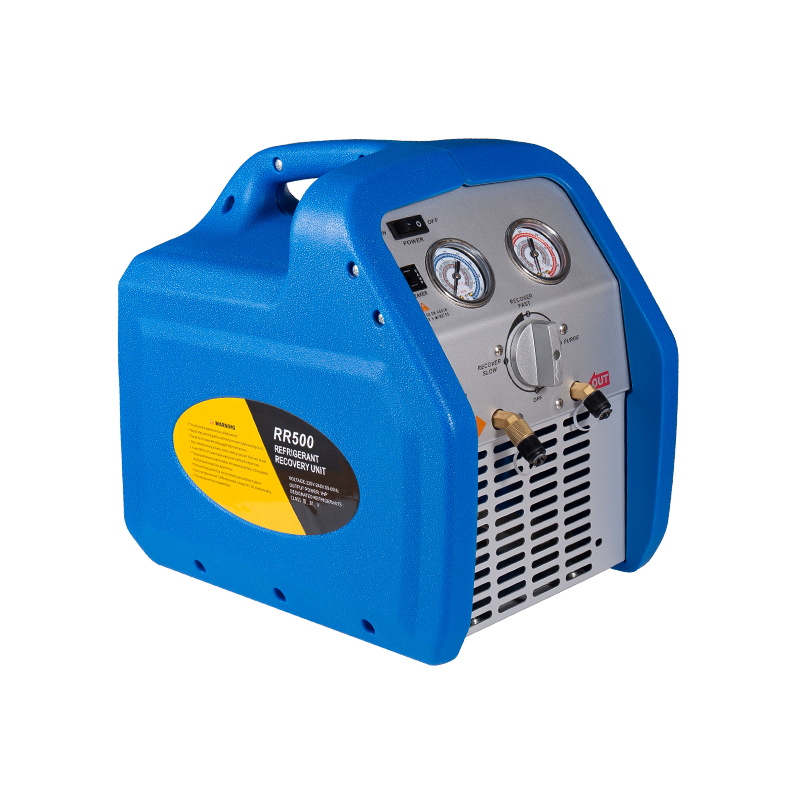
| Refrigerant recovery and recycling machine | RR250, RR500 | Recovery, recycling and charging of CFC, HCFC and HFC refrigerants | Voltage range, recovery rate, cylinder compatibility, oil separation |
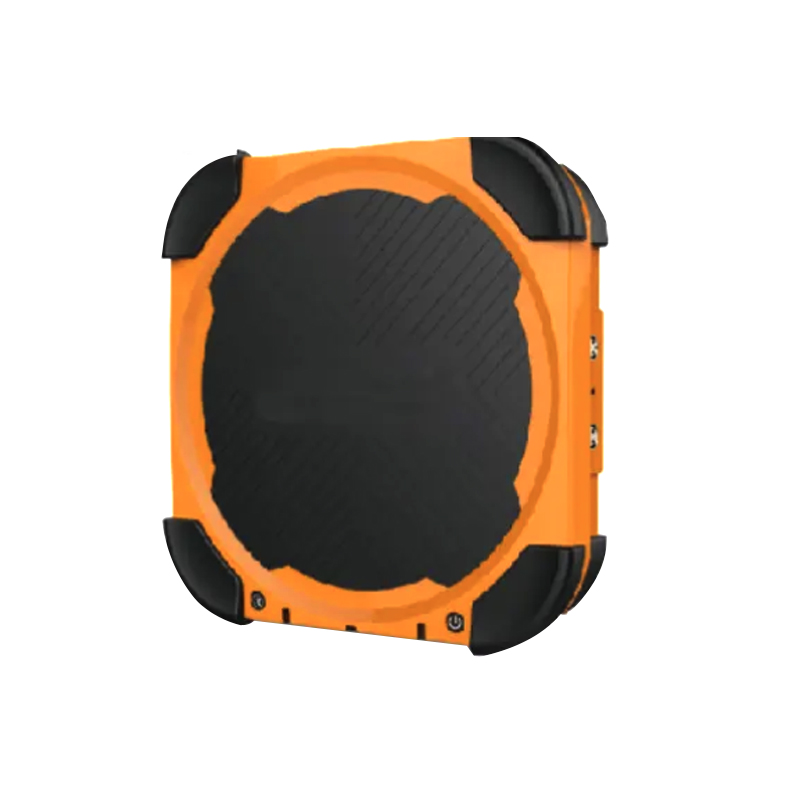
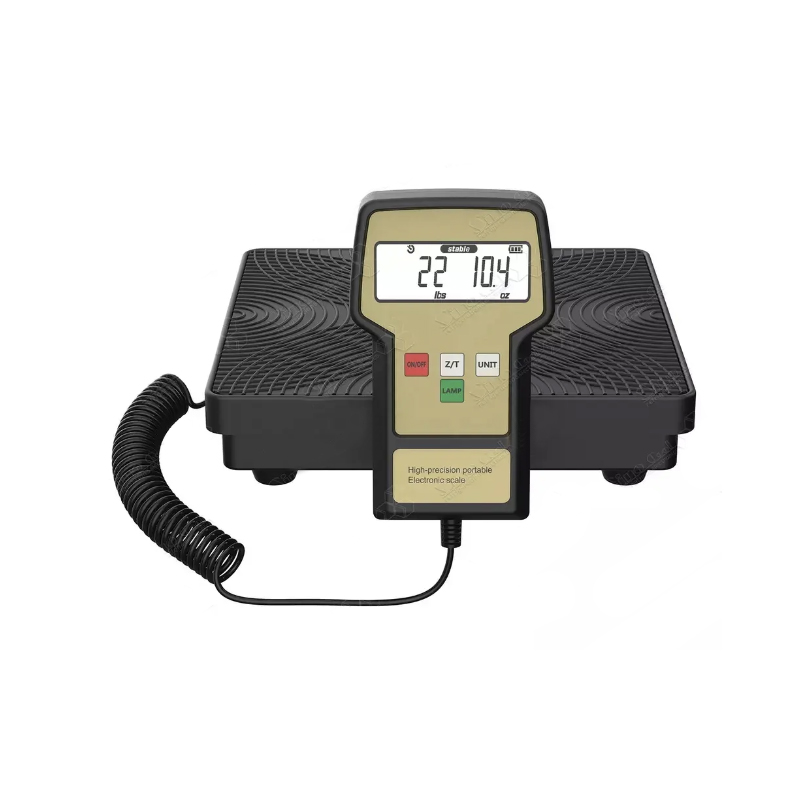
| Electronic refrigerant scale | LMC-210, LMC-210A, 50–100 kg digital scale | Charging by weight in service and production charging stations | Resolution, capacity, wireless operation, LCD display |
| Matched capacitors | Metalized polypropylene film types | Motor run and start protection for pumps and recovery compressors | Capacitance, voltage rating, case style, terminal layout |
Matching Pump Performance to Refrigerant and System Volume
Evacuation performance is decided by the relationship between ultimate vacuum, pumping speed and the volume of the system being evacuated. A pump rated at ≤5 Pa ultimate vacuum can pull moisture out of compressor oil and insulation, but only if the pumping speed is matched to the system volume and the refrigerant in circuit. R32 systems foam more aggressively than R134a because of higher refrigerant solubility in oil, so initial pumping speed must be controlled.
- Small hermetic systems (≤5 L): 50–100 L/min class pumps, with slower initial opening for R32.
- Residential A/C and commercial refrigerators (5–20 L): 100–180 L/min class pumps.
- Large chillers and VRF (20–100 L): 200–400 L/min class pumps, often with two-stage evacuation.
- Industrial refrigeration (>100 L): 400–800 L/min class pumps with oil separators and catch jars.
We supply pumps with gas ballast and oil-change indicators, and we recommend oil separators and transparent catch jars for R32 work. For service carts that combine a pump, recovery unit and scale on one frame, we pre-wire the electrical connections and install EMI suppression capacitors at the input so that VFD noise from the recovery unit does not disturb the scale load cell.
Recovery Units and Charging Scales
Our RR250 and RR500 recovery and recycling machines handle CFC, HCFC and HFC refrigerants across a 100–240 V / 50–60 Hz supply. They are built for field recovery, cylinder transfer and recycling, with oil separation and filter elements that protect the compressor during repeated recovery cycles. The machines are configured with the hose and valve set appropriate to the refrigerant family and the cylinder connection used in the destination market.
The LMC-210 and LMC-210A wireless electronic scales are designed for charging by weight, with a wireless display that lets the technician read the charge value away from the cylinder. The 50–100 kg digital electronic refrigerant charging scale uses a high-precision LCD display for larger cylinder charging. Resolution and capacity are selected according to whether the scale is used for small split systems or for bulk charging in a production environment.
Capacitor Integration and Motor Protection
Vacuum pump and recovery unit motors start and stop frequently and see voltage sags during line connection. Metalized polypropylene film capacitors improve power factor and reduce starting current peaks, extending motor life and protecting relays and contactors. Because we manufacture these capacitors ourselves, we can supply the correct motor-run and start capacitor values matched to the pump or recovery unit motor, rather than leaving the electrical protection to a separate sourcing step.
For permanent split capacitor motors, the capacitor value must be correct for efficient torque during the low-pressure phase, when gas load is minimal but oil viscosity is high. We test capacitor performance as part of our production process and can supply matched sets with the pump or recovery unit.
Installation, Commissioning and Maintenance Support
We supply installation materials, manifold gauge sets, hoses, brass and copper fittings, and oil separators from the same inventory as the pumps and recovery units. That means a service company can order a complete evacuation and charging kit rather than assembling it from multiple suppliers. Our technical team can recommend the pump speed and ultimate vacuum combination based on refrigerant type, system volume and required cycle time.
Maintenance is supported with preventive kits covering oil, filters and inlet strainers. For customers in high-ambient regions such as the Middle East and Southeast Asia, we recommend pumps with larger oil reservoirs and forced-air cooling to maintain oil viscosity and ultimate vacuum. Oil-change indicator lights and exhaust filter monitoring help users detect performance degradation before it affects moisture removal.
Quality Control and Documentation
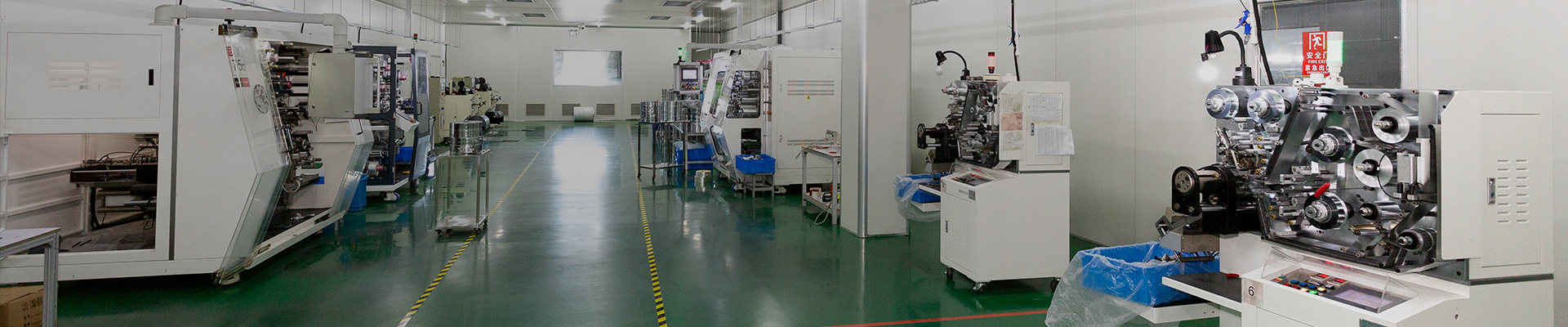
Our capacitor production uses high-precision slitting and winding equipment, automated lines and testing equipment that monitors quality during production. The same quality discipline applies to the refrigeration service equipment we supply: pumps are checked for vacuum performance, recovery units for refrigerant compatibility and scale electronics for stable load-cell readings. Products are packed for export with the documentation needed for customs and distributor inventory.
We export to more than a dozen countries across the Middle East, Africa, South America and Southeast Asia. Our business model places each employee in direct contact with the market, so fragmented and personalized requirements are handled quickly rather than pushed through a slow approval chain.
Information We Use to Configure Your Solution
To prepare a suitable configuration and quotation, we need the following project inputs. These determine pump size, recovery unit model, scale capacity and the accessory set.
- Refrigerant types handled (R134a, R410A, R32, R407C, others)
- System volume range in liters, from smallest to largest unit serviced
- Required evacuation time and target moisture level
- Power supply voltage, frequency and plug type for the destination market
- Scale capacity and resolution needed for the charging station
- Whether a mobile service cart combining pump, recovery unit and scale is required
- Hose lengths, manifold gauge configuration and cylinder connection type
- Annual quantity and whether the order is a single trial or a repeat program
Frequently Asked Questions
Can you supply a vacuum pump that handles both R32 and R134a from the same unit?
Yes. We can source variable-speed vacuum pumps with inverter-driven motors and two-stage design, with a speed control range that allows slow initial pumping for R32 to prevent oil foaming, then full speed for R134a and R410A. Pre-configured controller interfaces with stored refrigerant profiles reduce operator error.
How do you ensure the pump maintains ≤5 Pa ultimate vacuum after field use?
We supply pumps with oil-change indicator lights and exhaust filter monitoring. Preventive maintenance kits covering oil, filters and inlet strainers are available as part of our one-stop procurement. For high-ambient regions, we recommend pumps with larger oil reservoirs and forced-air cooling to maintain oil viscosity and ultimate vacuum.
Do you offer integrated carts combining pump, recovery unit and scale?
Yes. We offer mobile service carts that combine a vacuum pump, recovery unit and high-precision electronic scale on a single frame, with pre-wired electrical connections and EMI suppression capacitors installed at the input to prevent VFD noise from interfering with the scale load cell. Quick-connect manifolds with check valves prevent oil back-migration during pump shutdown.
What scale capacity and resolution should I specify?
For small split system charging, a scale with 0.1 g resolution and moderate capacity is suitable. For bulk charging or production stations, the 50–100 kg digital electronic refrigerant charging scale with high-precision LCD display is more appropriate. We match the scale to the cylinder size and the charging accuracy your process requires.
Can you supply matched capacitors with the pump or recovery unit?
Yes. As a manufacturer of metalized polypropylene film capacitors, we supply the motor-run and start capacitors matched to the pump or recovery unit motor. This ensures correct torque during the low-pressure phase and protects relays and contactors from starting current peaks.
What is the typical lead time and minimum order?
Lead time and minimum order depend on the model mix and whether the order includes customized hoses, plugs or cart configurations. We confirm these details when we prepare the quotation based on your project inputs. For repeat programs, we can plan production around your forecast.
For related refrigeration components, see our Refrigeration Parts range and the full product catalog.

