


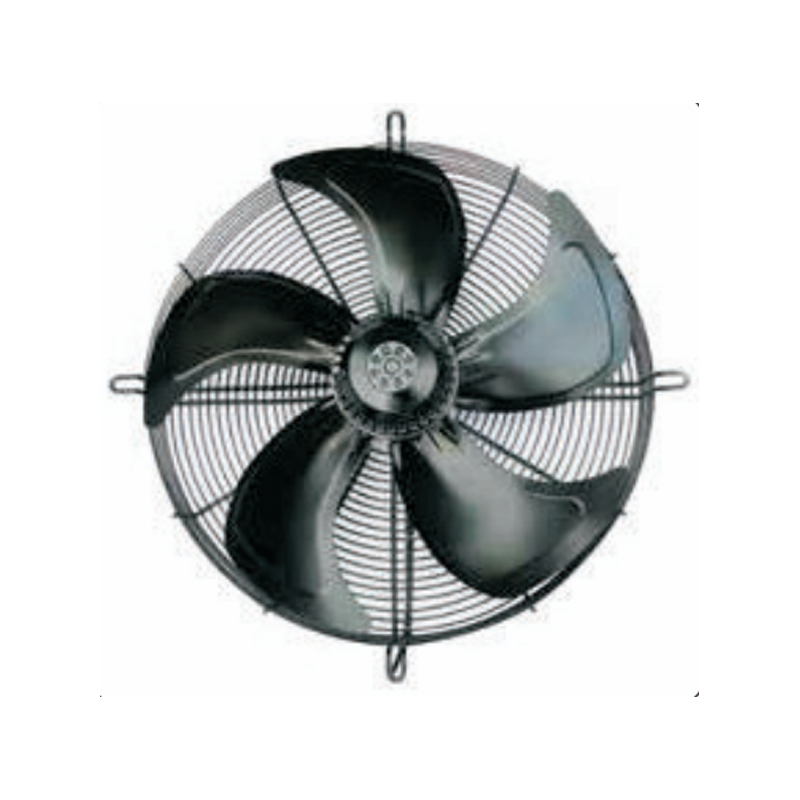


Ningguo Kingcool Import and Export Co., Ltd supplies Refrigerator Axial Fan, A/C Axial Fans as part of a one-stop appliance and refrigeration parts programme. We combine our own metalized polypropylene film capacitor production with an agency range of air conditioner, refrigerator and washing machine accessories, so a single order can cover the fan, the run capacitor, the fan blade and the mounting hardware that keep a condenser coil working.
Our axial fan range is built around forced-convection condenser cooling in household refrigerators, display cabinets, split and window air conditioners, condensing units and small commercial refrigeration equipment. We quote from the working point: airflow required, static pressure of the coil and grille, supply voltage and frequency, shaft and mounting dimensions, and the ambient conditions of the destination market.
What We Manufacture and Supply in This Range
As a Refrigerator Axial Fan, A/C Axial Fans Manufacturers, we match product configuration to the application, operating limits, interfaces and acceptance criteria defined for each project.
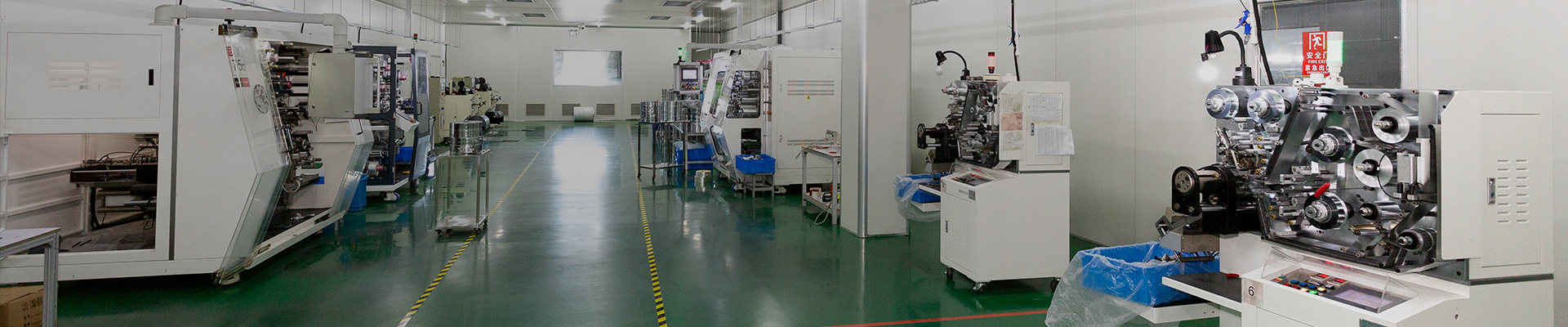
Our core production is metalized polypropylene film capacitors, manufactured on high-precision slitting and winding equipment with an annual capacity of 10 million units and tested on dedicated equipment. That capacitor capability sits directly behind our fan business: fan motors need a correctly matched run capacitor to reach rated speed quickly and hold it as the compressor cycles.
Around the fans themselves we act as an agent and consolidator for air conditioner and refrigerator accessories. The result is a complete axial fan package rather than a loose part number — motor, impeller, capacitor, guard, lead wires and connectors supplied together where the application calls for it.
Where Axial Fans Fit in the Refrigeration Circuit
Axial fans move air parallel to the shaft, which suits the low-resistance, high-volume duty of a condenser. Mounted directly in front of or behind the coil, they continuously replace warmed air at the fin surface with cooler ambient air, holding the temperature gradient that lets refrigerant condense and keeping compressor head pressure inside its design band.
- Refrigerator and freezer condensers — compact fans for static and fan-assisted cooling circuits.
- Split and window A/C outdoor units — condenser fans sized to the coil face area and cabinet depth.
- Condensing units and small cold rooms — higher airflow units for continuous duty.
- Evaporator and air-curtain positions — where low noise and steady delivery matter more than peak airflow.
Product Range and Application Matching
| Product Type | Typical Application | Key Selection Data |
|---|---|---|
| Refrigerator axial fan | Domestic and commercial refrigerator condensers, fan-cooled cabinets | Frame size, voltage, airflow, noise, connector type |
| A/C condenser axial fan | Split, window and packaged outdoor units | Blade diameter, speed, static pressure, shaft diameter |
| AC/DC fan assemblies | Refrigeration cabinets, display cases, control enclosures | Supply type, bearing system, IP requirement |
| Matched run capacitor | Fan motor starting and running duty | Capacitance, voltage rating, case style, terminal layout |
| Fan blade and guard | Replacement and OEM assembly | Diameter, pitch, hub bore, rotation direction |
Related categories we supply alongside the fan range include AC/DC Fan assemblies, Fan Blade mouldings and Capacitor ranges for motor circuits.
Materials, Bearings and Mechanical Behaviour
Blade material and bearing type decide how a fan behaves after two or three cooling seasons, not on the day it is fitted. We discuss both openly during configuration because they drive the delivered cost and the failure mode the end user will see.
- Blade material — UV-stabilised reinforced ABS for general outdoor duty; aluminium alloy where higher temperature or rigidity is required.
- Bearing system — sleeve bearings for cost-driven indoor applications; dual ball bearings where long retention of speed and low vibration are priorities.
- Dynamic balancing — reduces vibration transmitted into copper refrigerant lines, a common cause of fatigue leaks on outdoor units.
- Thermal protection — integrated thermal overload with auto-reset protects the winding during blocked-airflow or high-ambient events.
Electrical Configuration and Automation Integration
We configure the electrical side around the line interface the customer already uses. Fan motors are supplied for the required supply voltage and frequency, with lead length, connector style and terminal orientation set to the harness or terminal block on the unit.
- Single-phase AC motors with matched run capacitors for direct mains operation.
- DC fan variants for cabinets and enclosures where a DC bus is available.
- Speed control through the unit controller, voltage protector or microcomputer temperature control where the system already manages fan staging.
- Lead wire gauge, insulation class and connector type agreed against the customer drawing.
Where a project also needs control-side components, our Indoor And Outdoor Air Conditioning Motor range and Refrigeration Parts programme cover the surrounding electrical and refrigerant-side items.
Installation, Commissioning and Maintenance
Axial fans are mechanically simple, and most field problems trace back to installation rather than the fan itself. Our documentation covers the points that matter at commissioning.
- Correct rotation direction confirmed before the unit is closed up.
- Blade-to-shroud clearance checked so the impeller does not foul the orifice ring.
- Mounting fasteners torqued evenly to avoid distorting the motor bracket.
- Capacitor rating verified against the motor nameplate before first start.
- Air path kept clear of packaging, insulation and debris that raise static pressure.
For maintenance programmes, we supply replacement fans, blades, capacitors and mounting parts as individual items so a service agent can carry a small stock rather than complete assemblies.
Quality Control and Acceptance
Our capacitor production runs with real-time monitoring during manufacture and dedicated testing equipment, and the same discipline is applied to the fan and accessory items we consolidate. Every fan is checked for running current, speed, vibration and noise before packing, and the matched capacitor is verified for capacitance and insulation before it is boxed with the motor.
Acceptance documentation is prepared to the level the project requires: dimensional report against the approved drawing, electrical test record, and packing list matched to the purchase order line items. Where a customer operates its own incoming inspection, we agree the sampling plan and the parameters to be measured before the first shipment.
Information We Use to Configure Your Solution
Our proposal is based on the working point, the material and the production target. The following inputs let us select the right fan, capacitor and mounting set without a round of guesswork.
| Project Input | What It Determines |
|---|---|
| Equipment type and model | Frame size, mounting pattern, airflow target |
| Supply voltage and frequency | Motor winding, capacitor rating, lead configuration |
| Condenser coil face area and grille | Blade diameter, pitch, static pressure capability |
| Ambient temperature range | Blade material, bearing type, insulation class |
| Shaft and hub dimensions | Impeller fit, rotation direction, balancing spec |
| Noise and vibration limits | Bearing selection, balancing grade, mounting isolation |
| Annual volume and delivery schedule | Batch planning, packing format, shipment grouping |
Packaging, Delivery Scope and Support
Fans are packed to protect the impeller and shaft during transit, with individual cartons for service-channel orders and bulk cartons for production-line supply. Each shipment carries a packing list matched to the order, and mixed containers can combine fans, capacitors, motors and other refrigeration parts from our range.
Our business model puts every employee in direct contact with the market, which is how we handle fragmented and personalised requirements quickly. Whether the requirement is a single model number for a repair chain or a scheduled programme for an OEM line, the same team follows the order from configuration through to delivery.
Frequently Asked Questions
Can you supply the fan and its run capacitor as a matched set?
Yes. Because we produce metalized polypropylene film capacitors ourselves, we can pair the fan motor with a capacitor rated for its starting and running duty, and test the pair before packing. This removes the risk of a mismatched capacitor slowing the fan and raising condenser head pressure.
Which blade material should be specified for hot climates?
For high-ambient markets such as the Middle East and Southeast Asia, UV-stabilised reinforced ABS or aluminium alloy blades hold their shape better than standard plastics. We select the material together with the bearing type so the fan keeps its airflow and stays quiet across the season.
Do you support replacement and service-channel volumes?
We do. Fans, blades, capacitors and mounting parts can be ordered as individual items in service-friendly cartons, which suits repair networks and aftermarket distributors that need a broad stock rather than large single-model quantities.
What documentation accompanies an axial fan order?
Orders are shipped with a packing list matched to the purchase order, and dimensional and electrical test records are prepared where the project requires them. We agree the inspection parameters and sampling plan with the customer before the first production batch.
Can axial fans be combined with other refrigeration parts in one shipment?
Yes. Our one-stop procurement service covers air conditioner, refrigerator and washing machine accessories, so a container can combine axial fans with capacitors, motors, thermostats, filter driers and copper fittings from the same order.
How do we start a configuration for a new model?
Send the equipment type, supply voltage and frequency, condenser coil face area, shaft and hub dimensions, ambient conditions and expected annual volume. From those inputs we select the fan, capacitor and mounting set, and return a configuration with the technical data needed for your approval drawing.

