




Ningguo Kingcool Import and Export Co., Ltd is a China-based supplier of appliance and HVAC parts, combining our own metalized polypropylene film capacitor production with a broad agency range of air conditioner, refrigerator, refrigeration and washing machine accessories. Within that range, our Filter Drier For Refrigerator range covers the copper-bodied driers used on domestic refrigerator and light commercial refrigeration circuits.
The drier is a small part with a large effect on system life: it holds the desiccant that removes residual moisture and traps particulate carried through the sealed circuit after evacuation and charging. We supply these driers as part of a one-stop refrigerator parts programme, so a single order can combine driers with Capillary Tube, thermostats, motors and control boards.
What Our Filter Drier Range Covers
As a Refrigerator Parts-Filter Drier For Refrigerator Manufacturers, we match product configuration to the application, operating limits, interfaces and acceptance criteria defined for each project.
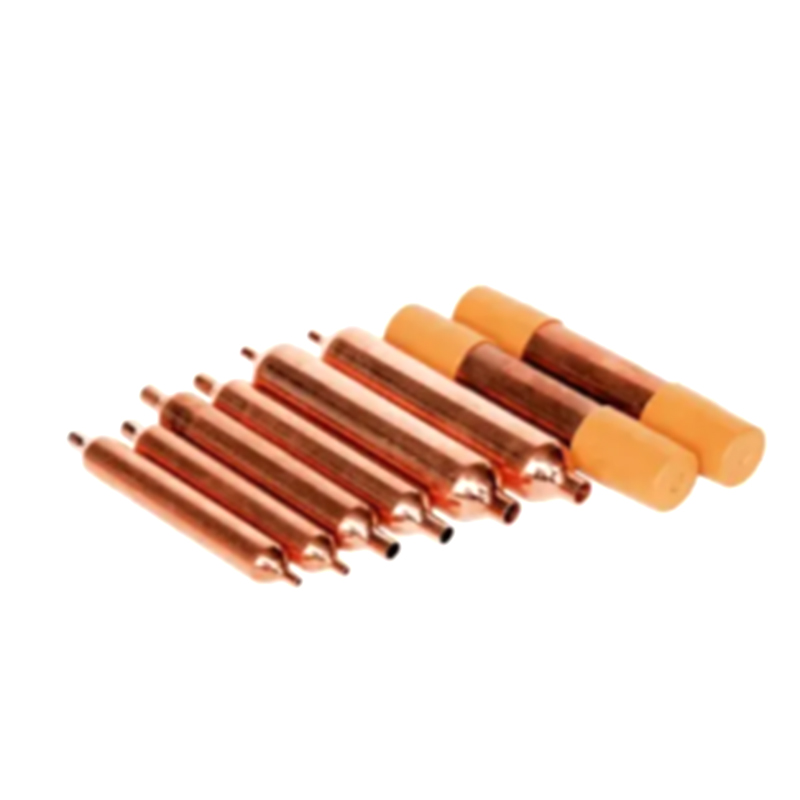
Our refrigerator filter drier is built around a copper shell with brazed or soldered end connections, an internal filter screen and a molecular sieve desiccant charge. The product is intended for the suction or liquid line of a sealed refrigeration circuit, where it must hold pressure, resist vibration and stay leak-tight over the service life of the appliance.
- Desiccant selection: non-oriented or oriented molecular sieves are recommended for R12, R22, R502 and R134a refrigerant circuits, matched to the working fluid and the moisture load expected after evacuation.
- Housing: copper body with consistent wall thickness for brazing without distortion at the joint.
- Filtration: internal screen retention to stop desiccant fines and metal particles migrating toward the capillary tube or expansion device.
- Connections: capillary tail, flare or solder-end formats to suit the assembly method used on the production line.
Where the Drier Sits in the Refrigerator Circuit
In a domestic refrigerator the drier is normally installed on the liquid line ahead of the capillary tube, downstream of the condenser. Its job is to present clean, dry liquid refrigerant to the capillary, because any moisture or debris reaching that narrow bore changes the pressure drop and the evaporating temperature. That is why drier selection is tied to the compressor, the refrigerant charge and the capillary bore rather than treated as a stand-alone item.
We supply the drier alongside the rest of the sealed-system components, so the parts that share the same circuit can be specified together. A typical refrigerator parts package from us includes:
- Refrigerator Parts for the sealed system, cabinet and electrical side of the appliance.
- Motor For Refrigerator and fan assemblies that move air across the evaporator and condenser.
- Refrigerator Control Board and thermostat components for temperature regulation and defrost sequencing.
- Refrigeration-side items such as filter driers and oil separators, copper tube, brass and copper fittings, and installation materials for service and assembly work.
Selection Variables We Work From
A drier that is correct for one refrigerator model can be wrong for another with a different refrigerant, charge or capillary restriction. The table below shows the variables we use to narrow the range before quoting.
| Selection Variable | Why It Matters | What We Need From You |
|---|---|---|
| Refrigerant type | Determines desiccant chemistry and compatibility of seals and lubricant | R12, R22, R502, R134a or other |
| Connection format | Must match the brazing or soldering method and tube diameter on the line | Capillary tail, flare or solder end; tube OD |
| Body size and volume | Sets desiccant capacity and the pressure drop across the drier | Available installation space and charge size |
| Desiccant type | Balances moisture uptake against acid and wax adsorption | Non-oriented or oriented molecular sieve |
| Working pressure | Affects shell thickness and joint integrity under thermal cycling | High-side or low-side installation point |
| Packaging and marking | Protects the desiccant from ambient moisture before charging | Bulk carton, sealed bag or line-feed format; label content |
Airtightness, Service Life and the Case for Correct Sealing
Airtightness is the property that decides how long a filter drier performs. A drier that holds pressure keeps refrigerant inside the circuit and keeps air and moisture out. When the shell, end joints or seals allow even a slow leak, the consequences show up as reduced cooling, higher energy consumption and extra wear on the compressor.
The relationship runs both ways. Over time the molecular sieve saturates and the internal screen and seals can age or deform, so the drier loses both drying capacity and sealing performance. Replacing a saturated drier at the right service interval restores circuit performance and protects the compressor.
Practical points for assembly and service: keep the drier sealed until the moment of brazing; purge with dry nitrogen during brazing to limit oxidation inside the shell; evacuate to the specified level before charging; and never reuse a drier that has been open to atmosphere.
Quality Control and Acceptance
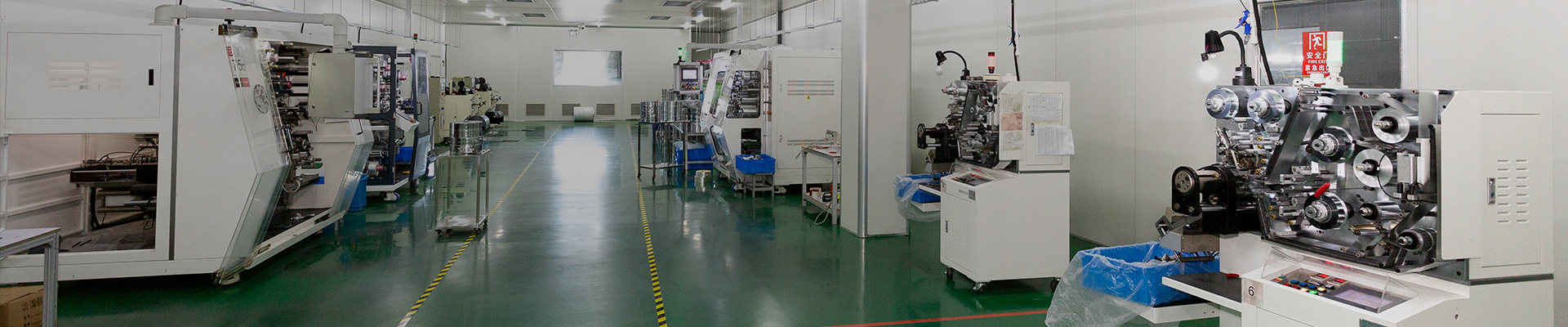
Our capacitor production runs on high-precision slitting and winding equipment with testing equipment monitoring output through the process, and that same discipline of documented inspection applies to the parts we supply. For filter driers, the checks that matter at goods-in and on the line are:
- Shell dimensions and connection geometry against the drawing or sample.
- Joint integrity and leak testing on a sample basis, with results recorded against the batch.
- Desiccant type and fill consistency, confirmed against the declared specification.
- Cleanliness of the internal screen and freedom from loose particles.
- Sealed packaging condition on arrival, since a compromised bag defeats the desiccant before installation.
Where a project requires inspection documentation, we agree the inspection items and the record format with the customer before production so that the paperwork matches the receiving process.
Information We Use to Configure Your Solution
We prepare a configuration and quotation from the working point of the appliance, not from a catalogue number alone. The following inputs let us match the drier and any companion parts in one proposal.
- Refrigerant and lubricant used in the circuit.
- Installation position and available space, with tube diameter at the connection.
- Connection preference and the brazing or soldering process on your line.
- Desiccant type required, or the moisture and acid load the circuit is expected to carry.
- Annual or per-order quantity, and whether the parts feed a production line or a service network.
- Packaging format, labelling and any inspection records needed at goods-in.
- Companion parts to be quoted together, such as capillary tube, thermostat or control board.
One-Stop Supply Across the Appliance Parts Range
Because we operate as an agent for air conditioner and refrigerator accessories as well as a capacitor producer, customers can consolidate refrigerator and air-conditioning requirements into one shipment. Alongside the filter drier, our Refrigeration Parts range covers copper tube, brass and copper fittings, control valves, manifold gauges and refrigerant handling tools, which suits distributors and service organisations that stock across categories.
Our metalized polypropylene film capacitors are produced on our own lines with an annual capacity of 10 million pieces and are exported to markets across the Middle East, Africa, South America and Southeast Asia. That export experience shapes how we pack, label and document mixed appliance parts orders.
Frequently Asked Questions
Which desiccant should be used for R134a refrigerator circuits?
Non-oriented or oriented molecular sieves are recommended for R12, R22, R502 and R134a circuits. For R134a we confirm the sieve type against the lubricant and the expected moisture load, because the desiccant must remain compatible with the oil and must not release fines into the capillary tube.
Can the drier be supplied with a capillary tail already fitted?
Yes. We quote the connection format to match your assembly method, including capillary tail, flare and solder-end versions. Providing the tube diameter and the brazing process used on your line lets us confirm the geometry before production.
How is the drier protected before installation?
Driers are supplied in sealed packaging so the desiccant does not absorb ambient moisture in storage. We agree the packaging format with the customer, and the drier should stay sealed until the moment it is brazed into the circuit.
What causes a filter drier to lose performance in service?
The molecular sieve gradually saturates as it takes up moisture, and the internal screen and seals can age or deform over time. Both effects reduce drying capacity and airtightness, which is why scheduled replacement is part of keeping the sealed system efficient.
Can we combine filter driers with other refrigerator parts in one order?
Yes. We supply a complete refrigerator and washing machine accessory range, so driers can be quoted together with capillary tube, motors, thermostats, defrost components and control boards, giving customers a single procurement route for mixed appliance parts.
What information speeds up a quotation?
Send the refrigerant type, connection format and tube diameter, installation position, desiccant preference, order quantity, packaging and labelling requirements, and any inspection records needed. With those details we can confirm the configuration and prepare the quotation without a round of clarification.

