


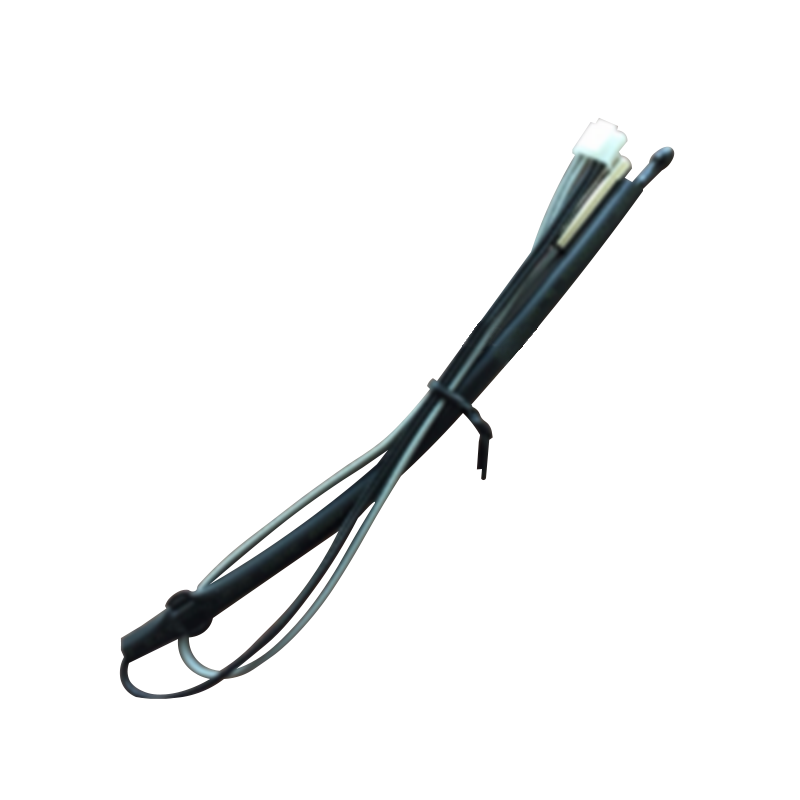


Ningguo Kingcool Import and Export Co., Ltd supplies All A/C Brands Sensor manufacturer range for air-conditioning service, assembly and replacement programmes. Our NTC temperature sensors are sealed in copper or stainless steel shells and are configured to match the original probe geometry, lead length and connector used by each air-conditioner brand.
What We Supply in the All A/C Brands Sensor Range
As a Air-Conditioner Parts-All A/C Brands Sensor Manufacturers, we match product configuration to the application, operating limits, interfaces and acceptance criteria defined for each project.
Our sensor range is built around the NTC thermistor: a high-precision, stable element sealed inside a metal shell so it can be mounted directly on coils, pipes and air paths. Because the electrical curve and the mechanical housing both have to match the unit being repaired or assembled, we treat the sensor as a configured part rather than a single catalogue number.
We are a China-based HVAC parts supplier serving importers, service networks and appliance assembly plants. The sensor range sits inside our wider Air-Conditioner Parts programme, so a single order can combine sensors with capacitors, motors, control boards and installation materials.
Sensor Types and Where Each One Fits
Air-conditioning systems use several sensor positions, and each position has different accuracy and response requirements. The table below shows how we match the sensor type to the application.
| Sensor Type | Typical Mounting Position | Application Fit |
|---|---|---|
| Coil / pipe sensor | Indoor evaporator and outdoor condenser tubing | Defrost control, coil temperature protection, capacity modulation |
| Room air sensor | Return-air grille or indoor unit inlet | Thermostat control and comfort set-point accuracy |
| Discharge sensor | Compressor discharge line | High-temperature monitoring and compressor protection |
| Outdoor ambient sensor | Outdoor unit casing or air inlet | Defrost initiation and outdoor fan staging |
| Water / pipe strap sensor | Chilled-water pipe or heat-exchanger shell | Water-side temperature control and freeze protection |
Materials, Accuracy and Critical Specifications
The sensing element is an NTC thermistor whose resistance falls as temperature rises. The resistance value at the reference temperature, the beta value and the tolerance band determine how closely the sensor tracks the original curve, so these are the first parameters we confirm before quoting.
- Housing: copper shell for fast thermal response on refrigerant tubing; stainless steel shell for humid, coastal or chemically exposed installations.
- Element tolerance: resistance tolerance and beta tolerance selected to match the control board's expected input curve.
- Operating temperature: probe and insulation rated for the actual line temperature at the mounting point, including discharge-line duty.
- Lead wire: PVC or high-temperature insulation, with length and gauge matched to the routing inside the unit.
- Termination: bare leads, ring terminals, spade terminals or brand-specific plug connectors.
- Sealing: epoxy or resin sealing at the probe-to-lead joint to keep moisture out of the element.
Why Sensor Accuracy Matters in the System
Sensor accuracy propagates through the whole control loop. A room sensor that reads high will hold the compressor on longer than needed; a coil sensor that lags will delay defrost and let frost build; a discharge sensor with the wrong curve can trip protection at normal operating temperature.
Accurate readings also support fault detection. When the control board sees a plausible, fast-responding signal, it can distinguish a genuine over-temperature event from a sensor fault, which reduces nuisance alarms and unnecessary service calls.
Configuration Options We Build To
Because air-conditioner brands use different probe shapes and connector systems, our sensor range is configured rather than fixed. The options below cover the majority of replacement and OEM requirements.
Probe Geometry
Straight, bent, ring-lug or strap-on probe bodies sized to the original mounting clip or bracket.
Electrical Curve
Resistance and beta values matched to the control board input so the replacement reads like the original.
Lead and Connector
Cable length, colour coding and plug type selected to suit the unit's wiring harness.
Integration with Controls and Other HVAC Parts
Sensors do not work in isolation. They feed the control board, which in turn drives contactors, relays and motors. We supply these adjacent items from the same programme, which simplifies matching a sensor to the rest of the repair or assembly kit.
- Temperature Controller units that accept NTC inputs for refrigeration and HVAC cabinets.
- Universal A/C Control System & Remote kits used when a board is replaced and the original sensor curve must be matched.
- Relays, overloads and delay timers that act on the sensor signal to protect the compressor.
Quality Control and Acceptance
Every sensor batch is checked against the agreed resistance curve before packing. We verify the element at reference temperatures, inspect the probe-to-lead seal, and confirm lead length and connector type against the approved sample.
For project orders we can supply a pre-shipment sample set so the receiving team can confirm fit and reading before the full quantity is installed. Where a customer requires it, we also prepare the inspection record that accompanies the shipment.
Installation, Maintenance and Spare Parts
NTC sensors are low-maintenance components, but installation practice affects their accuracy. The probe must make firm thermal contact with the pipe or coil, the lead must not be routed against hot discharge lines, and the connector must be fully seated to avoid intermittent readings.
We keep the sensor range available as a service spare, so replacement quantities can be ordered alongside other consumable parts. When a sensor is replaced, the control board should be checked for the correct input curve, since a mismatched element will read plausibly but control incorrectly.
Information We Use to Configure Your Solution
To quote the correct sensor, we work from the unit or the original part rather than from a generic description. The following inputs let us match the probe, curve and connector in one step.
- Air-conditioner brand, model and the sensor position being replaced.
- Original part number, or a photo of the probe and connector.
- Resistance value at the reference temperature and, where known, the beta value.
- Required lead length, wire gauge and insulation type.
- Probe material and mounting method (clip, strap, insertion or threaded).
- Order quantity, packing preference and destination port.
Frequently Asked Questions
Can you supply sensors that match a specific air-conditioner brand?
Yes. We configure the probe geometry, resistance curve, lead length and connector to match the brand and model you are servicing. Send the original part number or a clear photo and we will confirm the matching configuration.
What is the difference between a copper and a stainless steel probe?
Copper gives faster thermal response and is the usual choice for refrigerant tubing. Stainless steel resists corrosion better and suits humid, coastal or chemically exposed installations where the probe may be washed or exposed to condensate.
How do I know the replacement sensor will read correctly on the control board?
The key parameters are the resistance at the reference temperature and the beta value. We match both to the board's expected input, and we can supply a sample set for verification before the full order is installed.
Do you supply sensors together with other air-conditioner parts?
Yes. Sensors are part of our wider air-conditioner parts range, so they can be combined with capacitors, motors, control boards, contactors and installation materials in a single shipment. This supports one-stop procurement for service networks and assembly plants.
What information do you need to prepare a quotation?
We need the brand and model, the sensor position, the original part number or a photo, the required resistance and beta values if known, lead length and connector type, plus order quantity and destination. With those details we can confirm the configuration and quote directly.

