Content
The compressor for air conditioner and refrigerator systems is the single component that determines energy consumption, cooling capacity, refrigerant compatibility, and long-term reliability. Every other component in the refrigeration circuit — the condenser, evaporator, and expansion valve — performs at the ceiling the compressor sets. Choosing incorrectly costs 20 to 40% more in operating energy over a unit's lifetime. This guide covers efficiency benchmarks, capacity matching, failure diagnostics, and refrigerant pairing for residential and light-commercial applications.
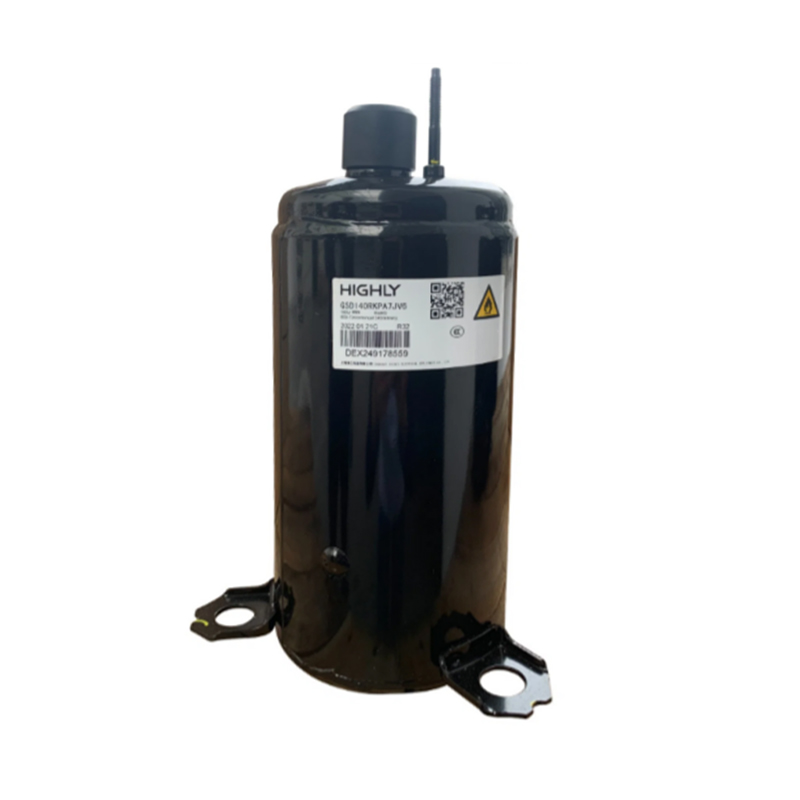
Compressor efficiency is measured by the Coefficient of Performance (COP) — the ratio of cooling output in watts to electrical input in watts. A COP of 3.5 means the compressor delivers 3.5 kW of cooling for every 1 kW consumed. The compressor type determines the COP ceiling attainable at any given operating condition.
| Compressor Type | Typical COP Range | Speed Control | Best Application | Noise Level |
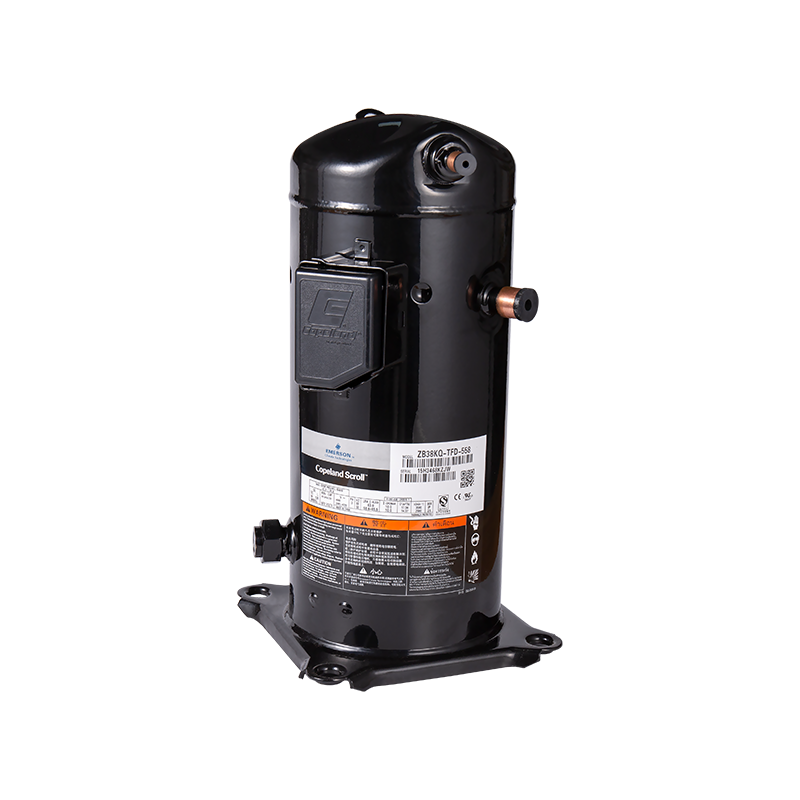
| Inverter Scroll | 3.8 – 5.2 | Variable (20 – 120 Hz) | Split AC, VRF systems | 42 – 52 dB |
| Fixed-Speed Rotary | 2.8 – 3.6 | Fixed (50/60 Hz) | Window AC, small splits | 48 – 58 dB |
| Inverter Rotary | 3.4 – 4.6 | Variable (15 – 100 Hz) | Mid-range splits, portables | 44 – 54 dB |
| Reciprocating (Piston) | 2.4 – 3.2 | Fixed | Refrigerators, small chillers | 52 – 64 dB |
| Linear (Refrigerator) | 3.0 – 4.0 | Variable (linear motor) | Premium household refrigerators | 25 – 38 dB |
Inverter scroll compressors lead all types on efficiency because the scroll geometry eliminates the reciprocating mass losses and valve leakage that limit piston designs. At part-load — which is 70 to 85% of actual operating time for most residential AC units — an inverter compressor running at 40 Hz consumes 35 to 50% less power than a fixed-speed unit cycling on and off to maintain the same average temperature.
Compressor runs at 100% capacity or stops completely. Cycles on and off 4 to 8 times per hour at part-load. Each start draws 3 to 5x running current for 0.5 to 2 seconds, generating heat, bearing stress, and measurable energy spikes on every cycle.
Compressor modulates speed continuously between 20 and 120 Hz to match real-time cooling demand. Eliminates start-stop cycling entirely during normal operation. Maintains set temperature within ±0.5°C vs ±2 to 3°C for fixed-speed units.
Compressor capacity is rated in BTU/h (British Thermal Units per hour) or watts of cooling output. Correct capacity matching is not about buying the largest available unit — both undersizing and oversizing produce measurable system failures within 2 to 5 years of installation.
For residential air conditioning, the standard load estimate is 600 to 700 BTU/h per square metre of conditioned space in a well-insulated room. Add 15% for high sun exposure, 10% for ceiling heights above 2.8 m, and 20% for commercial kitchen adjacency. Never round up by more than one nominal capacity step — an oversized compressor short-cycles destructively.
Multiply floor area (m²) by 650 BTU/h as the baseline. Add occupancy load — each person contributes approximately 400 BTU/h of sensible heat. Add appliance load for kitchens, server rooms, or commercial spaces: 1,000 to 3,500 BTU/h per major heat-generating appliance or equipment rack.
Ambient design temperature directly affects compressor duty. For ambient temperatures above 38°C, derate rated capacity by 8 to 12% — compressors are rated at AHRI standard conditions of 35°C ambient, and hot-climate performance falls measurably below nameplate. Manufacturers publish correction tables; use them.
Refrigerator compressors are sized by displacement (cm³) rather than BTU. A 200-litre household refrigerator typically requires a 7 to 10 cm³ displacement piston compressor at standard conditions. Commercial reach-in cabinets (400 to 600 litres) require 12 to 18 cm³ displacement, often with two-stage or parallel compressor arrangements for temperature stability.
Each compressor is rated for a specific suction and discharge pressure range aligned to its target refrigerant. Installing an R-410A-rated compressor with a system charged with R-22 produces suction pressures 30 to 40% lower than design, causing the compressor to run continuously without achieving setpoint — a failure mode that burns out motor windings within 800 to 1,200 operating hours.
Compressor failure accounts for 55 to 65% of total HVAC system replacement costs. The component itself rarely fails from random material fatigue — in 70% of documented failures, a specific operational or installation error is the direct cause, and that cause was present from day one of operation.
Install a suction line accumulator on all residential split systems and a crankcase heater on any unit exposed to ambient temperatures below 10°C. These two components, costing under 5% of the compressor's replacement value, prevent liquid slugging and oil migration — the two largest failure categories combined.
Refrigerant and compressor compatibility is a hard engineering constraint, not a preference. Each refrigerant operates at a specific pressure-temperature relationship that determines required compressor displacement, oil type, motor insulation class, and sealing material. Mismatching any one of these parameters produces system failure within months.
| Refrigerant | GWP | Operating Pressure | Compatible Compressor Oil | Recommended Compressor Type |
| R-410A | 2,088 | High (24 – 28 bar) | POE (polyolester) | Scroll, rotary — high-pressure rated |
| R-32 | 675 | High (25 – 30 bar) | POE (low viscosity) | Inverter scroll, inverter rotary |
| R-22 (legacy) | 1,810 | Medium (8 – 18 bar) | Mineral oil or alkylbenzene | Reciprocating, scroll |
| R-134a | 1,430 | Medium (6 – 16 bar) | POE | Reciprocating — refrigerators, automotive |
| R-290 (Propane) | 3 | Low – Medium (6 – 14 bar) | PAG or POE (HC-rated) | Hermetic reciprocating — refrigerators |
| R-600a (Isobutane) | 3 | Low (3 – 8 bar) | Mineral oil (HC-compatible) | Linear or hermetic reciprocating |
The shift from R-410A to R-32 as the dominant AC refrigerant — driven by R-32's 68% lower Global Warming Potential — requires compressors with higher discharge temperature tolerance. R-32 discharge temperatures run 10 to 15°C higher than R-410A at equivalent conditions, requiring motor winding insulation rated to Class F (155°C) or above and compressor oil formulated for the elevated thermal environment.
Never retrofit an R-410A system with an R-32 compressor without replacing all seals, motor windings verification, and full system oil flush. R-32 at high-pressure operating conditions attacks NBR (nitrile) rubber seals rated for R-410A service, producing refrigerant leak paths within 6 to 18 months of mixed-refrigerant operation.
Prioritise inverter scroll with R-32 or R-410A compatibility for new residential installations. Verify POE oil charge volume matches compressor manufacturer specification — not generic system volume tables.
For household units, R-600a hermetic reciprocating or linear compressors offer the lowest noise and energy. Commercial refrigeration on R-134a or R-290 requires displacement-matched hermetic piston compressors with HC-rated internal components.
Efficient charging, stable output, capacitor, thefirst choice for electric drive.
If you have anything to consult, you canfollow us, we will contact you as soon aspossible

Copyright © Ningguo Kingcool Import and Export Co., Ltd All Rights Reserved. Custom HVAC Parts & Accessories Suppliers