



Industry News
Home / News / Industry News / Why HVAC Manufacturers Use Reliable AC Capacitors: A Complete Practical Guide
Why HVAC Manufacturers Use Reliable AC Capacitors: A Complete Practical Guide
Posted by Admin | 23 Sep
Content
A Failed Capacitor Stops the Whole System
An air conditioning system can fail in many ways, but one of the most common and predictable failures is a swollen or burned-out capacitor. In a condenser unit, the capacitor is the component that pushes the compressor and the condenser fan motor into motion each cycle. When the capacitor gives out, the whole system stops, even if the compressor and motor are still in good condition. That is why reputable HVAC manufacturers treat capacitor reliability not as a minor cost detail, but as a first-line defense against breakdowns.
The Role of AC Capacitors in HVAC Equipment
Inside an air conditioning system, capacitors support two related but distinct functions. Start capacitors deliver a short, high-torque boost when a motor begins to spin. Run capacitors remain in the circuit during operation, helping the motor maintain efficiency and keep current balanced. A dual capacitor combines both roles in one cylindrical case, with separate terminals for the compressor and the fan motor. This is why you often see ratings like 45/5 mfd on a single part: the larger value is for the compressor, and the smaller one is for the condenser fan motor.
Start Capacitors vs. Run Capacitors
The difference affects the electrical design more than the physical size. A start capacitor is designed for intermittent duty and is usually wired through a potential relay or a solid-state switch. If it stays in the circuit too long, it overheats. A run capacitor is built for continuous duty and stays energized the entire time the motor runs. Using the wrong type creates a slow-burning problem: motors struggle to start, draw high current, or generate unnecessary heat.
Dual Run Capacitors in Modern Split Systems
Manufacturers commonly use dual capacitors in residential and light commercial split systems. This reduces the number of parts on the electrical panel, shortens wiring, and simplifies installation. The trade-off is that both the compressor and the fan motor depend on the same component, so a reliability problem in that component affects both loads at once.
Why HVAC Manufacturers Treat Capacitor Reliability as a Design Requirement
Reliability is not an accessory in capacitor selection; it is a design constraint. A capacitor that fails early can turn an inexpensive component into an expensive repair.
Compressor Protection Is the Highest Priority
The compressor is the most expensive component in a split system. A capacitor that fails while allowing voltage spikes or excessive current can damage the compressor winding. Manufacturers therefore choose capacitors that tolerate input voltage fluctuation, high ambient heat, and long running hours. The capacitor must fail gracefully if it does fail, not take the compressor down with it. This is why overpressure disconnection and a defined safety class matter.
Service Callbacks and Warranty Costs
A capacitor that costs three cents less at the factory can create a callback during the first cooling season. The cost of dispatching a technician, confirming the failure, installing a replacement, and rebuilding customer confidence almost always exceeds the price difference. For manufacturers, a reliable capacitor lowers the frequency of callbacks and reduces warranty exposure. In simple terms, it is cheap insurance.
Efficiency and Hot-Weather Performance
Run capacitors directly affect motor efficiency. If capacitance drifts out of tolerance, the motor draws more current and runs hotter. In an attic, hot roof, or rooftop unit, the surrounding temperature accelerates capacitor aging. Manufacturers select capacitors with a low dissipation factor and stable capacitance over temperature, helping the system maintain its rated efficiency when cooling demand is highest.
What Makes an AC Capacitor Reliable
Reliability is visible in materials and test data, not just in price. Quality AC capacitors use metallized polypropylene film, an aluminum case for heat dissipation, and a protection mechanism that interrupts the circuit if internal pressure rises. A suitable voltage margin is also important: a 440 VAC capacitor operating on a 230 V line has more headroom than a 370 VAC part, especially in areas with unstable power.
| Parameter | What to look for | Why it matters |
|---|---|---|
| Microfarad rating | Matches motor nameplate; tolerance ±5% | Wrong value causes weak starting or motor overheating |
| Voltage rating | 370 VAC or 440 VAC for 220-240 V lines | Prevents breakdown from line surges |
| Dielectric | Metallized polypropylene film | Self-healing behavior and repeated start cycles |
| Dissipation factor | Low tan delta value | Less internal heat, longer operating life |
| Temperature range | Approx. -25°C to +70°C | Covers condenser and compressor compartment conditions |
| Safety mechanism | Overpressure disconnection; P2 safety class | Isolates the failure without damaging the system |
Suppliers that verify performance against accepted motor-capacitor standards, such as IEC 60252-1, provide stronger evidence of long-term endurance than suppliers that only quote catalog values.
How Manufacturers Qualify Capacitor Suppliers
Original equipment manufacturers and experienced importers look for documented test results, not just a low price. The qualification process typically covers materials, sample testing, and production consistency.
Testing and Documentation
- Capacitance at rated voltage and tolerance verification
- Dissipation factor and insulation resistance checks
- Endurance testing under repeated charge-discharge cycles
- Dielectric withstand test at elevated voltage
When these results are available and repeatable, the buyer can compare capacitors by technical data instead of guesswork.
Consistency Across Batches
Reliability varies from batch to batch when a supplier changes film thickness, sealing quality, or production settings. Manufacturers prefer suppliers that can show stable parameters over multiple lots. This consistency is equally important for an export partner: the factory should be willing to share specifications and package markings, and the exporter should be able to trace the product back to a production lot.
Safety Approvals and Market Requirements
Depending on the destination market, capacitors may need to meet local electrical safety regulations. A flame-retardant case, proper sealing, and clear terminal markings reduce the risk of improper installation. For cross-border buyers, using a supplier that understands these requirements avoids receiving parts that cannot be legally sold or confidently installed.
What This Means for Replacement Part Buyers
The same reliability logic that guides HVAC manufacturers applies to anyone who buys replacement capacitors. A cheap capacitor can fail again within a season, causing a second service call and a dissatisfied customer. Whether you are a distributor building a local inventory or a technician replacing a failed part, use the same criteria as an OEM: exact microfarad rating, adequate voltage, proven dielectric, and safety-protected construction.
At Kingcool, we apply these same selection criteria when building our capacitor line, and that is why the catalog is centered on proven series rather than one-off parts. For common residential applications, many service trucks carry a CBB65R1 motor run capacitor as a first-line replacement for dual ratings such as 45/5 and 35/5 mfd. For compressor startup duty, a CD60 motor starting capacitor is the typical companion part. Both types fit the design logic described above: they are built for continuous load, protected against overpressure, and available in voltage ratings that suit 220-240 V systems.
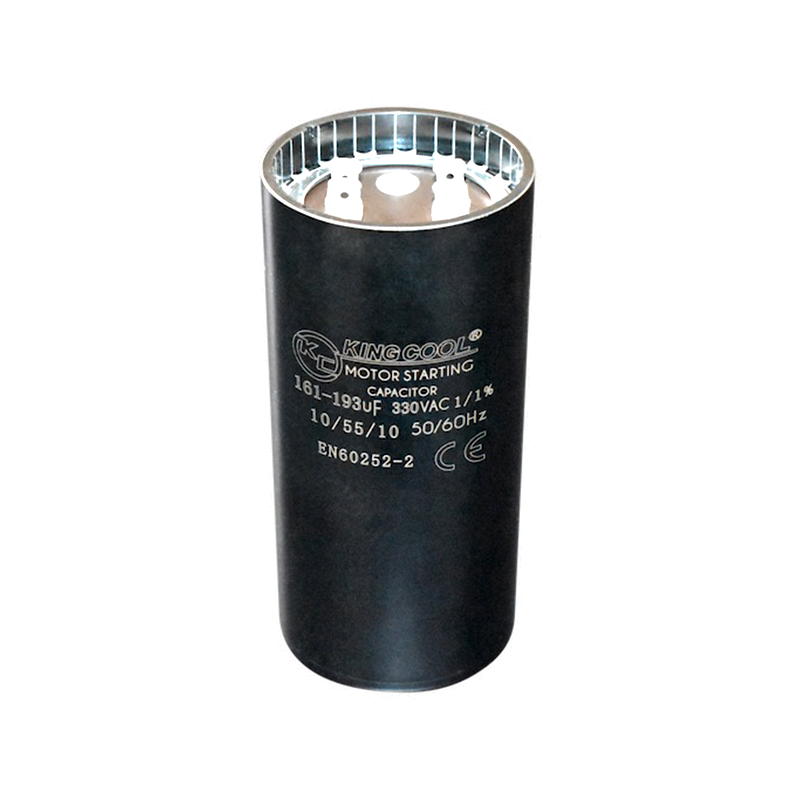 Wholesale KINGCOOL CD60 Motor Starting Capacitor Manufacturers, Company, ExporteWe Wholesale CD60 Motor Starting Capacitor, Ningguo KINGCOOL Is China CD60 Motor Starting Capacitor, Manufacturers, Company And Exporters...View Product →
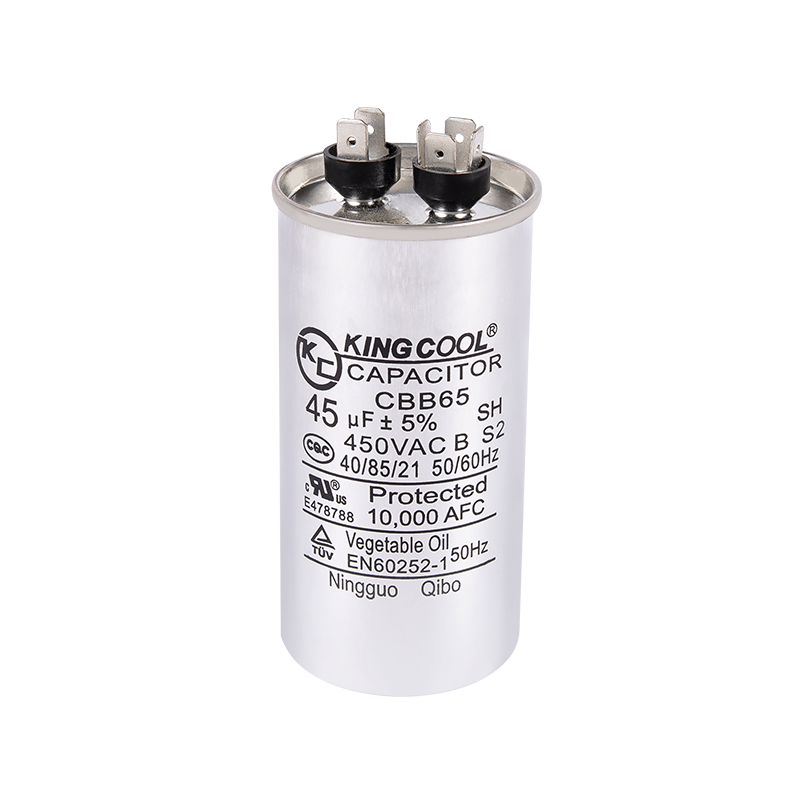 Wholesale KINGCOOL CBB65-R1 Manufacturers, Company, ExportersWe Wholesale CBB65-R1, Ningguo KINGCOOL Is China CBB65-R1, Manufacturers, Company And Exporters, details: Product Features: Metal case, p...View Product →
If you are diagnosing repeated AC failures, understanding the most common AC capacitor failure symptoms will help you distinguish a capacitor problem from a deeper electrical issue. You can view the full AC capacitor product range to compare ratings, and the broader replacement parts catalog includes the compressors, contactors, and motors that often sit next to these capacitors in a complete repair. For manufacturers and aftermarket buyers alike, the conclusion remains the same: reliable capacitors protect the entire system.
Recommended NEWS:
AC Capacitor: Essential Guide to Sizing, Symptoms, and Types
AC Capacitor: Essential Guide for Replacement and Testing
HVAC Capacitor Cost in 2024: What to Expect When Replacing Yours
Understanding AC Capacitors: A Comprehensive Guide
The Ultimate Guide to CBB60 450V AC Water Pump Capacitors: Usage, Replacement, and Troubleshooting
AC Capacitor vs. Compressor Capacitor: Functions and Applications
Recommended Products

Efficient charging, stable output, capacitor, thefirst choice for electric drive.
- Address: North of Funing Rd., Helixi Economic and Technology Development Zone, Ningguo, Anhui, China
- Phone/WhatsApp: +86-18110862602
- Email: [email protected]
Subscribe Our Newsletter
If you have anything to consult, you canfollow us, we will contact you as soon aspossible

Copyright © Ningguo Kingcool Import and Export Co., Ltd All Rights Reserved. Custom HVAC Parts & Accessories Suppliers