

 EN
 English
 Français
 Español
 عربى



Industry News
Home / News / Industry News / AC Capacitor Manufacturing Process Explained | Key Steps & Quality Checks
AC Capacitor Manufacturing Process Explained | Key Steps & Quality Checks
Posted by Admin | 30 Sep
Content
- 1 What the Manufacturing Process Really Determines
- 2 The Materials That Define a Capacitor's Performance
- 3 Step by Step: How an AC Capacitor Is Manufactured
- 4 Electrical Tests and Safety Standards That Follow Production
- 5 How Production Quality Shows Up in the Field
- 6 What to Check When You Source AC Capacitors in Bulk
An AC capacitor that swells and fails within its first season is rarely the victim of a single defect in the field. More often, the failure was already decided on the production line: film metallized with uneven edges, winding tension set too loosely, contact spray that did not fuse completely, or sealing carried out in a humid workshop. For this reason, the manufacturing process is a more reliable indicator of capacitor quality than the label printed on the case.
For HVAC technicians who replace failed parts and for buyers who import replacement capacitors in volume, understanding how AC capacitors are made is not academic. It explains why two capacitors with the same microfarad value and the same voltage marking can lose service life at very different rates inside the same condenser unit.
What the Manufacturing Process Really Determines
Every typical failure mode of an AC capacitor can be traced back to a specific process step. Capacitance drift is a function of film thickness control and winding accuracy. A rising tan delta, which is felt on site as abnormal case temperature, is most often created by poor termination spraying or weak weld joints. Case bulging and oil or resin leakage point to moisture entry or internal partial discharge, both of which are sealing problems. In a CBB65 design, the pressure interrupter only works if it was installed and calibrated correctly during assembly.
The conclusion is simple: long life is not something that can be added at the end of the production line. It is the result of keeping the film clean, the terminations solid and the housing sealed for the intended service life.
The Materials That Define a Capacitor's Performance
A motor-run capacitor is built around a dielectric made of metallized polypropylene film, usually only a few micrometres thick. A very thin layer of aluminium or aluminium-zinc alloy is vacuum-deposited onto the film to form the electrode. The quality of this layer controls the capacitance value, the resistance of the electrode, and the self-healing ability of the capacitor after an internal breakdown.
- Metal sprayed onto both ends of the wound element creates the electrical termination that connects all film layers in parallel.
- The case is either an aluminium shell or a flame-retardant plastic housing, depending on the series and the intended duty.
- Resin fill is used in dry-type CBB65 and CBB60 designs to lock out moisture and support the element against vibration.
- The pressure interrupter, which is essential in aluminium-shell CBB65 units, is mechanically linked to the internal construction so that it opens the circuit if internal pressure rises abnormally.
Compromised materials sound obvious, but in practice they are the first area where cost-driven manufacturing deviates. Thinner film, lower-purity aluminium, diluted resin and a cheaper interrupter design are invisible from the outside of the finished capacitor.
| Component | Contribution to performance | What poor quality causes |
|---|---|---|
| Metallized polypropylene film | Establishes dielectric strength and self-healing behaviour | Early breakdown and capacitance drift |
| Vacuum-deposited electrode | Controls capacitance and equivalent series resistance | Overheating and high tan delta |
| End spray termination | Connects each film layer into a single conducting path | Open circuit or hot spot failures |
| Case and sealing system | Protects the element against humidity and vibration | Bulging, leakage and shortened life |
| Pressure interrupter | Provides overpressure safety in CBB65 units | Rupture risk under abnormal conditions |
Step by Step: How an AC Capacitor Is Manufactured
The overall flow is similar across CBB60, CBB61, CBB65 and CD60 production lines, with the main differences being element design, housing type and sealing method.
Step 1 — Film Metallization
Production starts with the film. In a vacuum chamber, aluminium or aluminium-zinc vapour is deposited onto one side of the polypropylene film. Producers control the surface resistivity of the coating and also create margin patterns, leaving a clear band at one edge so the two electrodes of the finished element are guaranteed to be separated. Coating thickness and edge definition at this stage directly affect the dissipation factor and the breakdown voltage of the final capacitor.
Step 2 — Winding the Element
Two metallized films, one with the margin on the left and the other on the right, are wound together onto a core in a high-speed winding machine. Because the films are offset, each metal coating protrudes from only one end of the cylindrical element. The number of turns and the winding tension set the active area and therefore the capacitance value. Element winders must be kept in a clean, dry area; dust or humidity at this stage becomes a hidden weak point inside the finished part.
Step 3 — Terminating and Contact Spraying
Each end of the wound element is then metal sprayed so that the protruding electrode layers are fused together into a single conducting zone. These sprayed zones form the contact area to which leads, tabs or wires are later welded or soldered. This interface carries the operating current for the entire life of the part, and it is one of the most common locations where weak manufacturing shows up later as heat generation or an intermittent open circuit.
Step 4 — Assembly, Impregnation and Sealing
The treated element is placed in its housing, connected to the terminal system, and filled or dipped according to the construction type. Dry-type CBB65 and CBB60 capacitors are filled with resin after an impregnation step to displace residual air, because air cavities under high field stress are the origin of partial discharge. The case is then sealed by curling, and the unit is cured in a temperature-controlled oven. Sealing quality is the difference between a capacitor that lasts a decade and one that swells or leaks after a few months in service.
Electrical Tests and Safety Standards That Follow Production
Every capacitor leaves the line through a sequence of electrical tests. For the buyer, the values printed in a datasheet refer directly to this stage of production, so it is worth knowing what each number is trying to prove.
| Test | Typical limit | What it verifies |
|---|---|---|
| Capacitance at 100 Hz | ±5% of the rated value | Active area and winding accuracy |
| Tan delta at 100 Hz | ≤ 0.002 for polypropylene film | Dielectric losses and heating under load |
| Dielectric withstanding voltage | 1.5 to 2 times rated voltage between terminals | Insulation integrity of the element |
| Insulation resistance | Often specified at 3000 MΩ or higher | Absence of leakage paths |
| Overpressure disconnection | Operates before case rupture in CBB65 units | Function of the safety interrupter |
Complete testing also covers the endurance requirement described by IEC 60252-1 for AC motor capacitors. Importers who want to confirm that their supplier actually runs these checks can follow the same IEC 60252-1 verification process used for CBB65 units. The way rated voltage, capacitance tolerance and tan delta interact in practice is explained in more depth in our review of AC capacitor parameters.
How Production Quality Shows Up in the Field
Unreliable manufacturing tends to surface in recognizable patterns. A bulged or leaking case, a motor that hums but does not start, or a compressor that cycles and then trips usually directs the technician to the capacitor. What looks like an installation problem is often a factory problem:
- Edge spalling and weak margin design cause failure only after months of thermal cycling.
- Poor end-spray contact raises the temperature of the element and accelerates ageing.
- Moisture trapped during winding turns into condensation inside the case, which promotes corrosion and insulation loss.
- A missing or miscalibrated pressure interrupter is the difference between a safe open-circuit and a ruptured can.
Technicians who understand this pattern read the failure correctly on the first visit. Buyers who understand it are better at selecting suppliers before a bad batch is shipped.
What to Check When You Source AC Capacitors in Bulk
Ordering capacitors by microfarad value and rated voltage is not enough. The process-related details determine how many units will still be working for your customers after two years. When you review a quotation, ask for evidence of the following:
- The target capacitance tolerance for the production batch, usually ±5% for run capacitors.
- The tan delta limit and thermal test data at the maximum rated operating temperature.
- The actual construction of the CBB65 series, including the presence of a functional pressure interrupter.
- The sealing method for dry-type capacitors and the curing conditions used.
- Batch test records or a certificate referencing IEC 60252-1 type testing.
Application matching matters as well. Heavy compressor duty calls for an aluminium-shell CBB65R1 AC run capacitor with an integrated safety interrupter. Fan, pump and general motor running applications are normally served by a CBB60 motor running capacitor. Applications that need a short, high-torque kick to get a motor rotating under load use a CD60 motor starting capacitor.
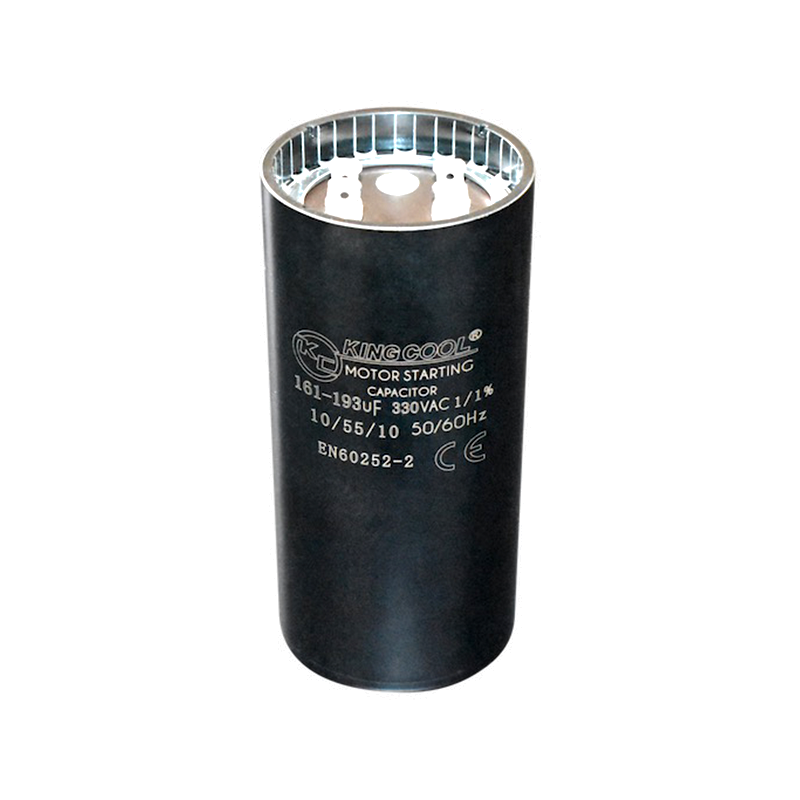 Wholesale KINGCOOL CD60 Motor Starting Capacitor Manufacturers, Company, ExporteWe Wholesale CD60 Motor Starting Capacitor, Ningguo KINGCOOL Is China CD60 Motor Starting Capacitor, Manufacturers, Company And Exporters...View Product →
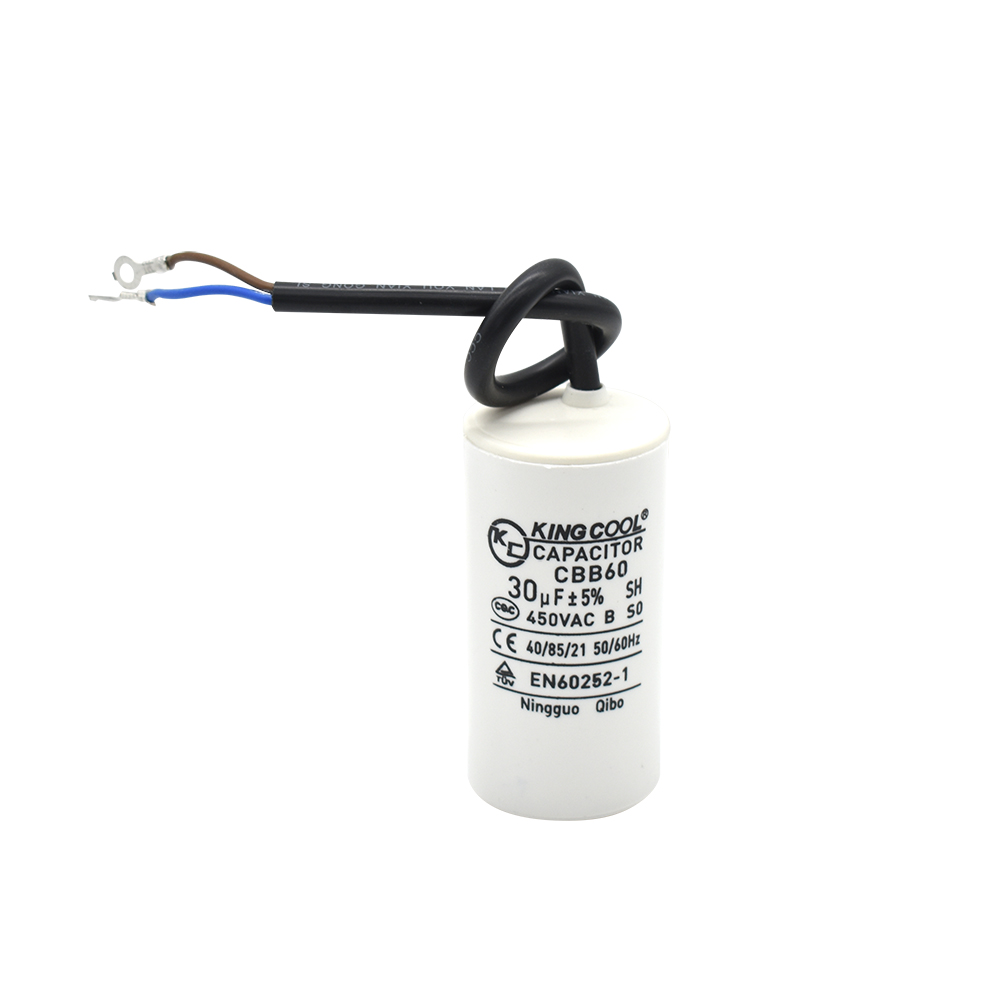 Wholesale KINGCOOL CBB60 motor running capacitor Manufacturers, Company, ExporteWe Wholesale CBB60 motor running capacitor, Ningguo KINGCOOL Is China CBB60 motor running capacitor, Manufacturers, Company And Exporters...View Product →
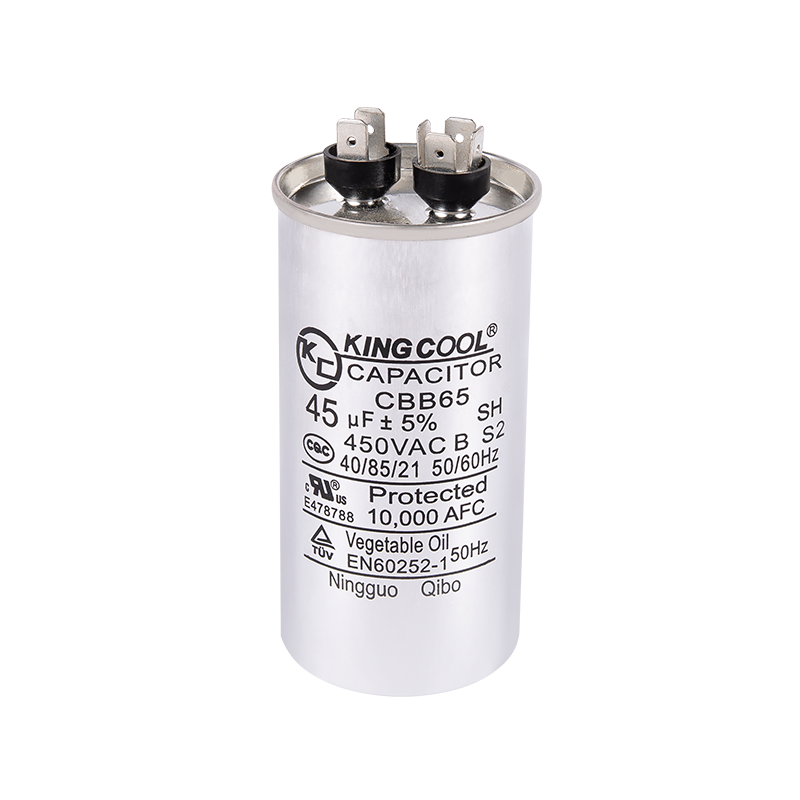 Wholesale KINGCOOL CBB65-R1 Manufacturers, Company, ExportersWe Wholesale CBB65-R1, Ningguo KINGCOOL Is China CBB65-R1, Manufacturers, Company And Exporters, details: Product Features: Metal case, p...View Product →
Because these parts move through the same replacement channel as air conditioners, refrigeration units and household appliances, it helps to discuss the whole order with one export team. If you want to compare construction details or request test documents, contact our export team with your target capacitance, voltage and monthly volume.
Recommended NEWS:
CBB65-R1: Key Features and Applications of High-Performance AC Capacitors
AC Capacitor Maintenance: Tips for Extending the Life of Your Cooling System
AC Capacitor: Essential Guide to Sizing, Symptoms, and Types
AC Capacitor: From Basics to Applications, A Comprehensive Guide
AC Capacitor Types: Choosing the Right One for Your HVAC System
AC Capacitor: Essential Guide for Replacement and Testing

Efficient charging, stable output, capacitor, thefirst choice for electric drive.
- Address: North of Funing Rd., Helixi Economic and Technology Development Zone, Ningguo, Anhui, China
- Phone/WhatsApp: +86-18110862602
- Email: [email protected]
Subscribe Our Newsletter
If you have anything to consult, you canfollow us, we will contact you as soon aspossible

Copyright © Ningguo Kingcool Import and Export Co., Ltd All Rights Reserved. Custom HVAC Parts & Accessories Suppliers