Content
A cooling system is only as good as the air it can move. Pick the wrong Air Conditioner Fan and even a well-designed HVAC unit runs hot, loud, and inefficient — pick the right one and airflow, energy use, and equipment life all fall into place together.
Efficient Airflow
Proper circulation and stable distribution across residential, commercial, and industrial cooling equipment.
Energy Efficiency
Optimized motor operation reduces energy consumption and improves overall HVAC efficiency.
Reliable Operation
Continuous-duty capability reduces maintenance frequency and extends equipment service life.
Five specifications determine whether a fan performs correctly in a given HVAC application.
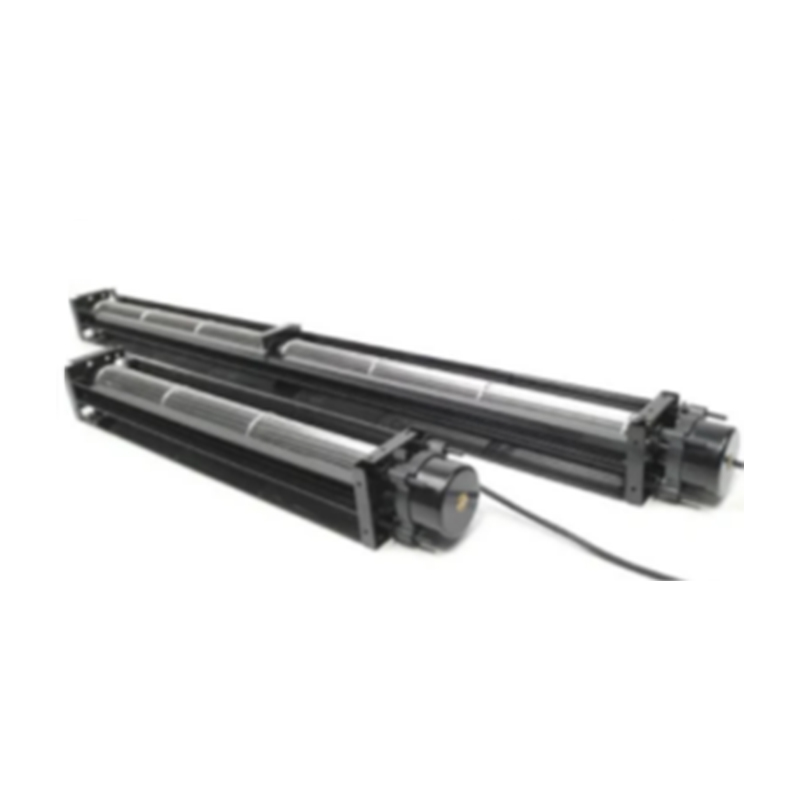
| Fan Type | Axial, centrifugal, or cross flow — matched to air volume and installation structure |
| Airflow & Pressure | CFM / m³/h and static pressure rated for the operating conditions |
| Motor Efficiency | Motor power, energy efficiency, and continuous running capability |
| Size & Compatibility | Fan dimensions, mounting structure, and electrical specifications |
| Noise & Vibration | Low-noise operation and a balanced fan structure for user comfort |
Typical Airflow Capacity by Fan Type (m³/h)
Illustrative figures; actual capacity depends on blade design, RPM, and duct configuration.
Axial fans suit applications needing high air volume with lower pressure, centrifugal fans handle higher static pressure in ducted systems, and cross flow fans work well where a wide, even air curtain matters more than raw volume.
Energy Consumption vs Motor Load (Relative Index)
Illustrative trend; energy draw rises sharply as motor load approaches full capacity.
Matching fan size to the opening is not the same as matching performance — airflow, pressure, and motor rating all have to fit the application together.
In residential systems, split and window air conditioners rely on fans for stable airflow and quiet operation that keeps a home comfortable without added noise. Commercial buildings — office towers, shopping centers, hotels, and public facilities — demand fans built for high operating frequency and reliable output over long duty cycles. Industrial cooling equipment, including chillers and control cabinets, depends on fans for efficient heat dissipation under continuous operation.
Verify production capacity and confirm the supplier performs motor testing and performance inspection before shipment. Check whether fan size, motor specification, and airflow requirements can be customized through OEM solutions, and evaluate supply stability alongside real engineering support — not just a sales quote.
Selecting a fan based only on physical size ignores air volume, pressure, and motor performance — the specifications that actually determine cooling output. Ignoring energy efficiency requirements can raise long-term operating costs even when the fan appears to work fine initially. Overlooking compatibility with existing electrical and installation requirements often causes integration problems that surface only after the equipment is already installed.
For HVAC manufacturers and maintenance teams, choosing the right air conditioner fan is what keeps a cooling system efficient and dependable over its full service life.
Axial fans move air in a straight line and suit higher-volume, lower-pressure applications, while centrifugal fans generate higher static pressure for ducted systems.
Confirm fan dimensions, mounting structure, and electrical specifications against the original component before ordering a replacement.
Often yes, but the lower long-term energy consumption can offset the higher initial cost over the equipment's service life.
Imbalanced fan structure, incorrect sizing, or motor issues are common causes and usually point to a fan mismatched to the application.
Efficient charging, stable output, capacitor, thefirst choice for electric drive.
If you have anything to consult, you canfollow us, we will contact you as soon aspossible

Copyright © Ningguo Kingcool Import and Export Co., Ltd All Rights Reserved. Custom HVAC Parts & Accessories Suppliers