

 EN
 English
 Français
 Español
 عربى



Industry News
Home / News / Industry News / How Defrost Timers Support Reliable Refrigeration System Operation and Defrost Control
How Defrost Timers Support Reliable Refrigeration System Operation and Defrost Control
Posted by Admin | 30 Oct
Content
- 1 What a Defrost Timer Actually Controls
- 2 The Real Cost of a Frosted Evaporator
- 3 A Complete Defrost Cycle, Stage by Stage
- 4 Mechanical and Electronic Defrost Control Compared
- 5 Matching a Defrost Timer to the System
- 6 Installation, Testing and Maintenance Checks
- 7 Practical Answers on Defrost Timer Specification and Service
A mechanical defrost timer runs on 230 V AC at 50/60 Hz, carries a single-pole double-throw contact set, and transfers the circuit from refrigeration to the defrost heater after 6, 8, 12 or 24 hours of accumulated compressor run time. That accumulated interval decides whether an evaporator coil clears completely far more than almost any other single setting on the system.
What a Defrost Timer Actually Controls
A defrost timer is an electromechanical or electronic controller that accumulates compressor run time and then switches the supply from the compressor and evaporator fan circuit over to the defrost heater circuit at a preset interval.
The device sits between two circuits. In refrigeration mode, the timer contacts pass line voltage straight through to the compressor contactor and the evaporator fan motor. Once the accumulated counter reaches its set point, the same contact set flips: the compressor and fan lose power, and the defrost heater gains it.
There are only two ways the heater stops. The first is the timer's own defrost time limit running out, usually somewhere between 15 and 30 minutes. The second is a defrost thermostat clipped to the evaporator coil opening the heater circuit once the coil surface reaches its set point, commonly +4 to +10 degrees Celsius. Many systems run both in series and treat the time limit as the safety backstop.
Defrost timer: a time-accumulating switch that transfers power from the compressor and evaporator fan circuit to the defrost heater circuit at preset intervals, then returns the system to normal refrigeration once a fixed time limit or a coil temperature set point is satisfied.
6 to 24 h Accumulated run-time intervals
15 to 30 min Typical heater time limit
+4 to +10 C Common termination point
Two separate time values matter here, and they get confused constantly. The accumulated interval decides how long the system runs between defrosts. The defrost time limit decides how long the heater may stay energised once a defrost has started. Mixing up those two numbers is the single most common reason a replacement timer does not fit the job.
Failure rarely announces itself. When the timer contacts stick in the refrigeration position, the system keeps running. There is no alarm and no shutdown. What actually happens is that defrost cycle after defrost cycle gets skipped, until the compressor has been running for hours on a coil that is completely blocked with frost and refrigerant is returning to the shell as liquid.
The Real Cost of a Frosted Evaporator
Beyond roughly 2 to 3 millimetres of frost, an evaporator coil loses air-side heat transfer capacity faster than it loses refrigerant-side capacity, and the system starts compensating with a lower evaporating temperature and longer run times.
Frost is a thermal insulator, and it also blocks air. It forms first between the coil surface and the air stream, then bridges between the fins and progressively reduces the free area the air can pass through. The fan either draws more power for the same volume or stalls outright, and the operating point on the fan curve shifts with it.
| Symptom | Underlying cause | Field verification |
| Cabinet temperature sits 3 to 5 K above set point | Frost restricting airflow across the evaporator | Inspect the coil face and measure air-side pressure drop |
| Compressor runs continuously without cycling off | Timer contacts stuck in the refrigeration position | Confirm 230 V AC is present at the timer motor terminals |
| Ice collecting on the cabinet floor | Drain pan or drain line still frozen when the heater shuts off | Check the drain heater and the termination temperature |
| Liquid refrigerant reaching the compressor | Defrost terminating before the coil has fully cleared | Measure suction superheat within 10 minutes of the cycle ending |
Extra running time on a frosted coil will not destroy a compressor in a single day. Across a full summer, though, higher discharge temperatures, elevated discharge pressure and consistently low suction superheat all trace back to one root cause: a defrost cycle that never finished its job. When a timer stops advancing, the decline is slow and quiet, and the performance impact of a failed defrost timer shows up on the electricity meter long before it shows up on any thermometer.
A Complete Defrost Cycle, Stage by Stage
A full defrost cycle runs through five stages, from contact transfer through heating, termination and drip delay back to refrigeration, and typically occupies 20 to 40 minutes in total depending on how much frost has built up.
- Run-time accumulation. The timer motor is energised only while the compressor runs, so fan-only or idle periods do not advance the counter. A timer wired across the fan circuit instead of the compressor will under-count and defrost too late.
- Contact transfer. At the set interval, the single-pole double-throw contacts open the compressor and evaporator fan circuit and close the defrost heater circuit.
- Heater energised. The heater warms the coil, usually with a fixed upper limit of 15 to 30 minutes protecting against a stuck thermostat.
- Temperature termination. The coil-mounted defrost thermostat opens the heater once the coil surface reaches its set point, commonly +4 to +10 degrees Celsius.
- Drip and restart. Meltwater drains off the coil and out through the drain pan and line. Once the thermostat closes again, the fan and compressor restart and normal refrigeration resumes.
The drip stage is where most premature terminations happen in practice. If the thermostat is clipped to the suction line rather than the coil bend, it reads a temperature that has nothing to do with how much frost is left on the fins.
Mechanical and Electronic Defrost Control Compared
A mechanical timer tolerates supply transients that damage electronic modules, while an electronic timer can shorten or extend defrost according to the actual coil temperature rather than a fixed clock.
Mechanical timer
- Synchronous motor driving a cam gear train
- Interval fixed at production: 6, 8, 12 or 24 hours
- Inherent surge tolerance, no electronics to protect
- Contact rating commonly 10 A at 250 V AC
- Contacts and gear train are the only wear items
Electronic timer
- Microcontroller with relay or triac output stage
- Programmable interval and on-demand defrost logic
- Adaptive sequencing based on recorded coil temperature
- Timing accuracy far tighter than a cam gear train
- Requires protection against voltage spikes and moisture
The useful distinction is not old against new, it is whether the cabinet needs adaptive defrost at all. On equipment built with a synchronous motor and a cam switch, fitting a mechanical timer to the correct specification is the shortest path back to service and introduces no new failure points.
Matching a Defrost Timer to the System
Matching a defrost timer comes down to three parameters: the accumulated run-time interval, the contact configuration and rating, and the mounting and shaft interface.
| Parameter | What to confirm | Typical value |
| Accumulated interval | Matches the frost build rate at the coil's humidity | 6 to 8 h on display cases, 12 h on domestic refrigerators |
| Contact rating | Handles heater and fan load with margin | 10 A at 250 V AC |
| Termination method | Fixed time limit, thermostat, or both in series | 15 to 30 min limit plus a +4 to +10 C thermostat |
| Mounting interface | Shaft length, mounting ear position, terminal orientation | Varies by cabinet chassis |
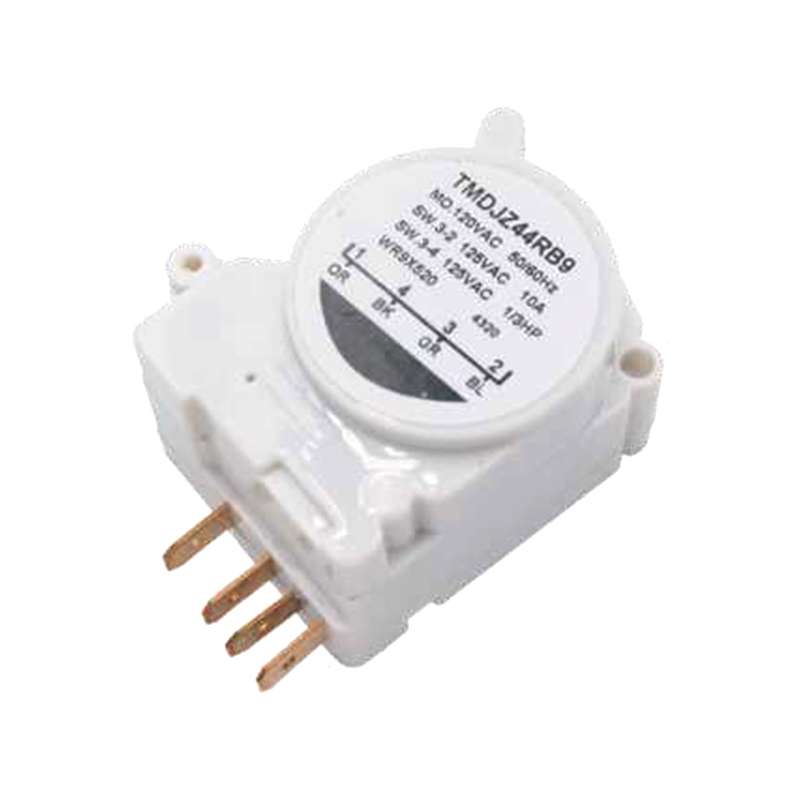
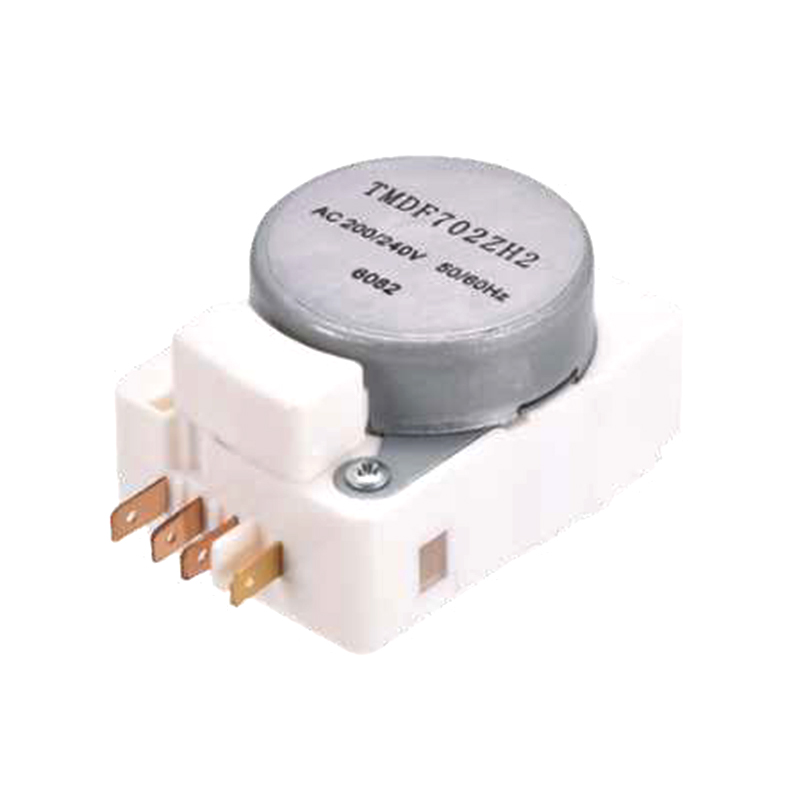
For direct replacements, the TMD series of defrost timers covers the 6, 8, 12 and 24 hour accumulated intervals found on most commercial refrigerators, display cases and freezers.
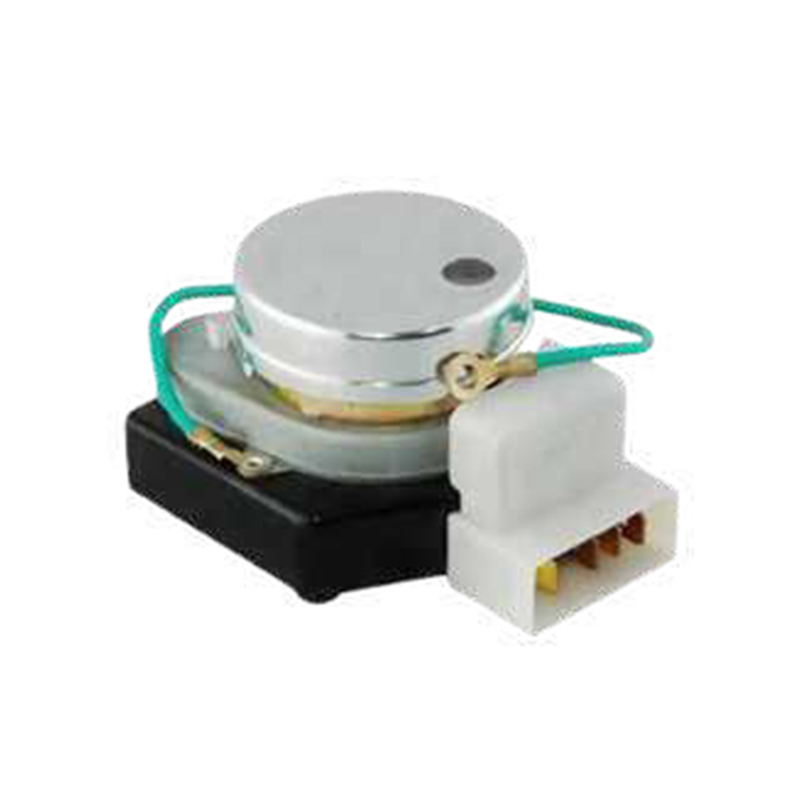 Defrost Timer TMD-BCH85 microwave capacitorView Product →
Sister models in the same family share the cam geometry but differ in shaft length and terminal layout, which means the mounting dimensions need confirming against the cabinet before the order goes out.
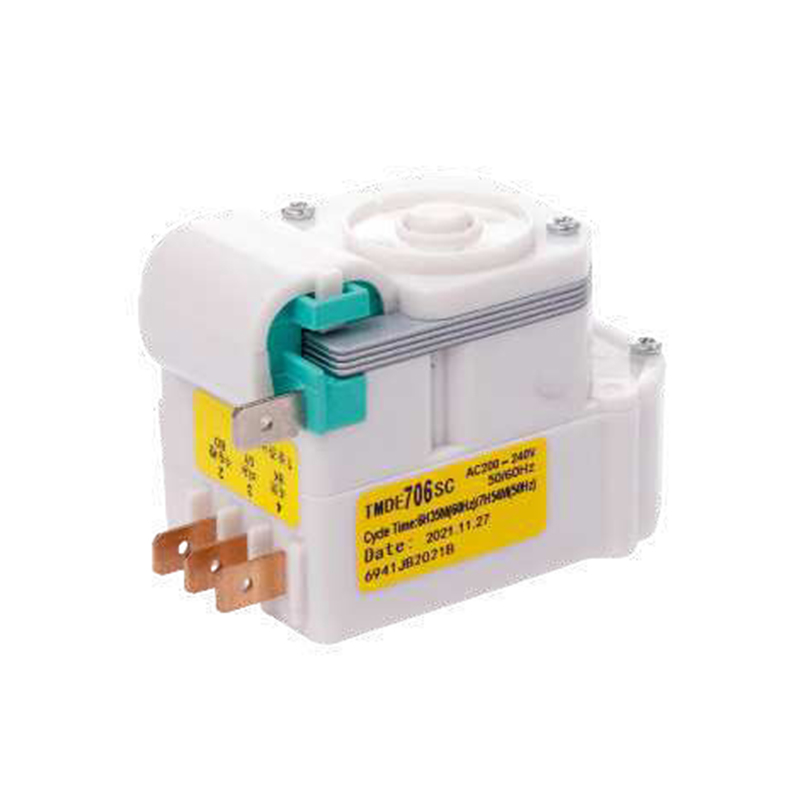 Defrost Timer TMD-ECH85 microwave capacitorView Product →
The termination device matters just as much. A defrost thermostat that opens while the coil is still at 0 degrees Celsius leaves residual frost behind no matter how accurate the timer is, and that residual layer compounds across every following cycle.
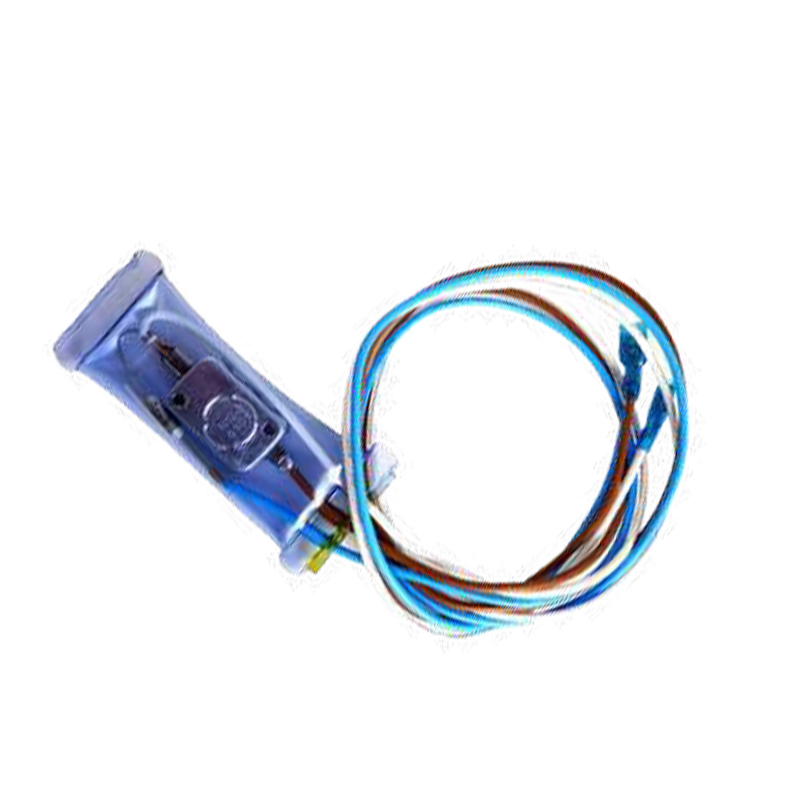
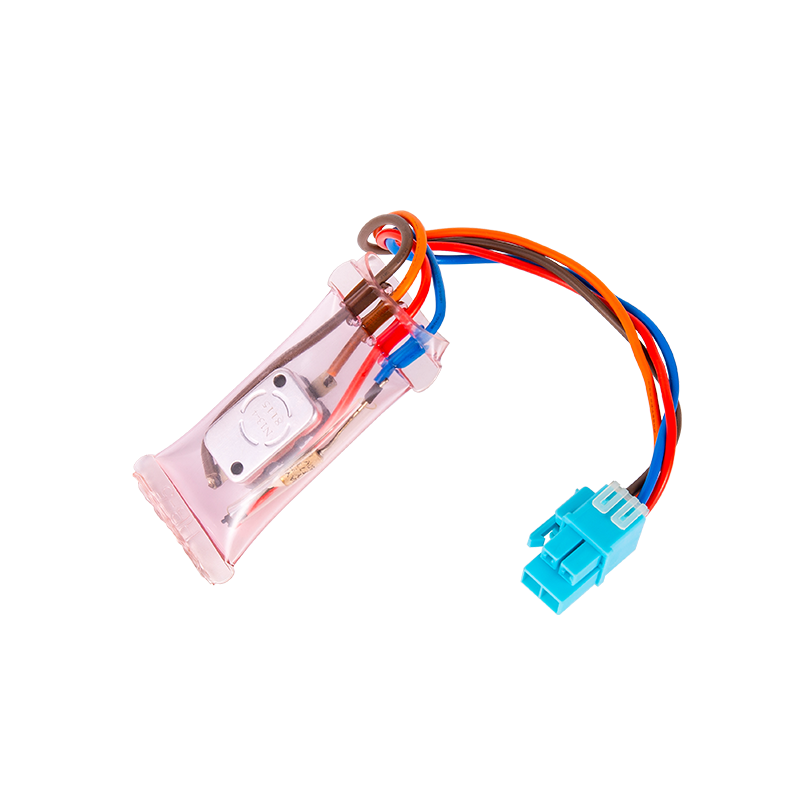
 Bimetal Thermostat1. Good quality and reasonable price. 2. Durable and long service life 3. Match with refrigeration equipment. 4. Excellent service 5. Good and high-quality control. 6....View Product →
Ningguo Kingcool Import and Export Co., Ltd. supplies defrost timers alongside the bimetal thermostats and defrost fuses that complete the same circuit, so a defrost repair can be sourced as one compatible set rather than three separate purchases.
Installation, Testing and Maintenance Checks
Four checks cover the majority of defrost timer faults: verify the timer motor supply, confirm the accumulated interval against the cabinet, measure heater current at the end of a cycle, and confirm where the thermostat sits on the coil.
- Confirm 230 V AC at the timer motor terminals before measuring anything else. A stalled synchronous motor produces the same service complaint as a welded contact set.
- Match the accumulated interval to real usage. A retail display case opened dozens of times a day suits 6 hours, while a domestic refrigerator with an intact door gasket is usually fine at 8 to 12 hours.
- Measure heater current near the end of a defrost cycle. If it sits well below the nameplate figure, either the heater is ageing or the timer never energised it in the first place.
- Check the defrost thermostat position on the coil. Clipped to the suction line instead of the coil bend, it will open while half the frost is still there.
- Fit a voltage protector on the 230 V AC supply to electronic control boards. Spikes on the supply are the most common reason an electronic defrost module stops sequencing correctly.
Practical Answers on Defrost Timer Specification and Service
How often should a defrost timer cycle?
Retail display cases with frequent door openings are normally set to 6 to 8 hours of accumulated compressor run time, while domestic refrigerators typically use 12 hours. A 24-hour interval only suits cabinets with tight gaskets, low ambient humidity and very light frost loading. When a cabinet starts frosting between cycles at its original setting, the interval is too long for the way the door is actually being used.
Can an electronic timer replace a mechanical defrost timer?
Only when the system already has a working defrost termination thermostat in series and the new module's output rating covers the heater load. The parameters that matter are terminal identification, accumulated interval and contact rating, not physical size. Terminal L1 and terminal 3 are not interchangeable on a 230 V AC circuit, and a miswired synchronous motor fails immediately.
What is the most common symptom of a failed defrost timer?
A compressor that runs continuously without cycling off, combined with a cabinet temperature sitting 3 to 5 K above set point, is the clearest signature. Confirm 230 V AC at the timer motor terminals before condemning the timer, because a broken supply wire produces identical symptoms and costs far less to fix.
How long does a mechanical defrost timer last?
With contacts switching a resistive heater load within rating, the expected service life spans 8 to 10 years of normal household operation. Life shortens noticeably when the timer drives an inductive load or a heater above its rating, because every break arc erodes the contact surface a little further until the contacts no longer close cleanly.
A defrost timer does not need to be complicated, but it does need to be exact every single time it switches. The accumulated interval, the contact rating and the termination temperature together decide whether an evaporator coil stays clear or slowly disappears under frost. For buyers stocking compatible replacements across several cabinet models, checking those three parameters against the system prevents the kind of compressor failure that looks random but traces straight back to the timer.
Volumes and cabinet-specific configurations can be quoted directly from the accumulated interval, the contact rating and the mounting interface. Request a quotation with the cabinet model and the existing timer part number, and the matching specification can be confirmed before shipment.
Recommended NEWS:
Defrost Timer: A Critical Component in Refrigeration Systems
Defrost Timer: A new perspective on refrigeration equipment efficiency and energy saving
How does the Defrost Timer perform in different climates? Are there any environmental factors that require special attention?
Ningguo Kingcool: Revolutionizing the Market with High-Quality Defrost Timers and Comprehensive Customer Solutions
Ningguo Kingcool Expands Global Reach with High-Quality Defrost Thermostats and Fuses
Refrigerator Defrost Timer Not Working? Causes & How to Fix It



Efficient charging, stable output, capacitor, thefirst choice for electric drive.
- Address: North of Funing Rd., Helixi Economic and Technology Development Zone, Ningguo, Anhui, China
- Phone/WhatsApp: +86-18110862602
- Email: [email protected]
Subscribe Our Newsletter
If you have anything to consult, you canfollow us, we will contact you as soon aspossible

Copyright © Ningguo Kingcool Import and Export Co., Ltd All Rights Reserved. Custom HVAC Parts & Accessories Suppliers