



Industry News
Home / News / Industry News / AC Capacitor Failure Modes and Thermal Management in High-Frequency and High-Current Applications
AC Capacitor Failure Modes and Thermal Management in High-Frequency and High-Current Applications
Posted by Admin | 25 Dec
Content
- 0.1 1. Common Failure Modes of AC Capacitors
- 0.2 2. Material Selection for Reliability
- 0.3 3. Thermal Management Strategies
- 0.4 4. Design Considerations for High-Frequency AC Capacitors
- 0.5 5. Reliability Design Guidelines
- 1 FAQs
- 1.1 1. What are the main failure modes for AC capacitors in high-current applications?
- 1.2 2. How can thermal management improve capacitor lifespan?
- 1.3 3. Why choose metalized film capacitors over electrolytic for high-frequency AC circuits?
- 1.4 4. What design considerations ensure AC capacitor reliability?
- 1.5 5. How does environmental exposure affect capacitor performance?
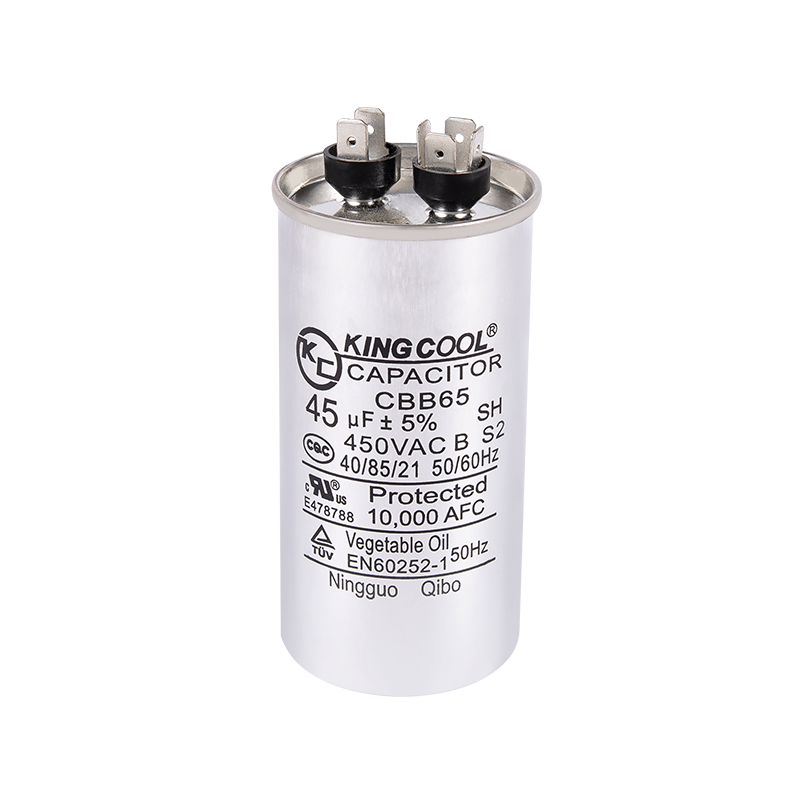
The AC Capacitor is critical for high-frequency and high-current applications, including motor drives, inverter circuits, and industrial power systems. Improper selection or insufficient thermal management can lead to failures such as excessive temperature rise, increased internal resistance, and dielectric breakdown. This article examines failure modes, thermal challenges, and strategies to ensure reliable operation of AC Capacitor in demanding environments.
1. Common Failure Modes of AC Capacitors
In high-frequency or high-current operation, AC Capacitor can face the following failure modes:
| Failure Mode | Cause | Impact | Mitigation |
|---|---|---|---|
| Excessive Temperature Rise | High ripple current, inadequate cooling | Accelerated dielectric degradation, reduced lifespan | Proper heatsinking, airflow management |
| Increased Internal Resistance | Electrolyte drying or electrode degradation | Voltage drop, loss increase, potential thermal runaway | Use high-quality metalized film, monitor ESR |
| Dielectric Breakdown | Overvoltage, high-frequency stress | Complete capacitor failure, circuit damage | Correct voltage rating, protective circuitry |
| Mechanical Stress Cracking | Vibration, thermal cycling | Capacitance drift, insulation loss | Robust packaging, vibration damping |
| Moisture Ingress | Environmental exposure | Short circuits, leakage current | Sealed construction, controlled environment |
2. Material Selection for Reliability
Choosing the right metalized film AC capacitor is essential for high-current and high-frequency scenarios. Metalized polypropylene film capacitors offer superior insulation, low dissipation factor, and high voltage endurance compared to electrolytic alternatives, enhancing long-term reliability.
3. Thermal Management Strategies
Effective capacitor thermal management includes:
- Heat sinks and thermal pads for high-current applications.
- Active airflow and cooling channels in dense PCB layouts.
- Temperature monitoring with thermal sensors and automatic shutdown in over-temperature conditions.
- Derating: Operating below maximum voltage and current ratings to reduce heat generation.
4. Design Considerations for High-Frequency AC Capacitors
For high-frequency AC capacitor designs, minimizing parasitic inductance and ESR is critical. Using proper layout techniques, low-inductance leads, and selecting capacitors with stable capacitance over frequency ensures performance consistency.
5. Reliability Design Guidelines
Implementing AC capacitor reliability design measures helps extend service life:
- Derating voltage and current to 70-80% of nominal ratings.
- Choosing capacitors with temperature stability for expected operating range.
- Regular inspection of ESR and capacitance to detect early degradation.
- Redundant capacitor networks in critical systems for fault tolerance.
- Proper encapsulation to protect against vibration and moisture.
FAQs
1. What are the main failure modes for AC capacitors in high-current applications?
Common failures include excessive temperature rise, increased internal resistance, dielectric breakdown, mechanical stress cracking, and moisture ingress. High-current operation increases thermal and electrical stress on capacitors, emphasizing the importance of thermal management.
2. How can thermal management improve capacitor lifespan?
By implementing heatsinks, airflow channels, temperature monitoring, and voltage/current derating, capacitor thermal management reduces thermal stress, delays dielectric degradation, and prevents catastrophic failures, especially in high-frequency and high-current environments.
3. Why choose metalized film capacitors over electrolytic for high-frequency AC circuits?
Metalized film AC capacitor provides low ESR, high insulation resistance, and better thermal stability than electrolytic capacitors. This ensures reliable operation in high-frequency switching, inverters, and motor drives.
4. What design considerations ensure AC capacitor reliability?
AC capacitor reliability design includes voltage and current derating, temperature-resistant dielectric materials, proper encapsulation, redundancy in critical systems, and monitoring ESR/capacitance over time to detect early degradation.
5. How does environmental exposure affect capacitor performance?
Humidity, vibration, and dust can accelerate failures. Sealed construction, robust packaging, and vibration damping are crucial for maintaining performance and extending the service life of high-frequency AC capacitor and high-current AC capacitor.
Recommended NEWS:
CBB65-R1: Key Features and Applications of High-Performance AC Capacitors
AC Capacitor vs. Compressor Capacitor: Functions and Applications
AC Capacitor: Essential Guide for Replacement and Testing
AC Capacitor: Essential Guide to Sizing, Symptoms, and Types
Understanding AC Capacitors: Functions, Types, and Common Issues
Everything You Need to Know About AC Capacitors: Types, Functions, and Troubleshooting
Recommended Products

Efficient charging, stable output, capacitor, thefirst choice for electric drive.
- Address: North of Funing Rd., Helixi Economic and Technology Development Zone, Ningguo, Anhui, China
- Phone/WhatsApp: +86-18110862602
- Email: [email protected]
Subscribe Our Newsletter
If you have anything to consult, you canfollow us, we will contact you as soon aspossible

Copyright © Ningguo Kingcool Import and Export Co., Ltd All Rights Reserved. Custom HVAC Parts & Accessories Suppliers