



Industry News
Defrost Timer: Features, Applications, and Selection Guide
Posted by Admin | 05 Aug
Content
A Defrost Timer is the control component that switches a refrigeration system out of cooling mode on a schedule, runs a short defrost cycle to clear ice from the evaporator coil, then hands control back to the compressor. Without it, frost keeps building on the coil until heat transfer drops off and the whole system has to work harder to hold temperature.
DEFROST CYCLE SEQUENCE
COOLING → TIMER TRACKS RUNTIME → THRESHOLD REACHED → DEFROST MODE → HEATER MELTS ICE → COOLING RESUMES
// 01What a Defrost Timer Controls
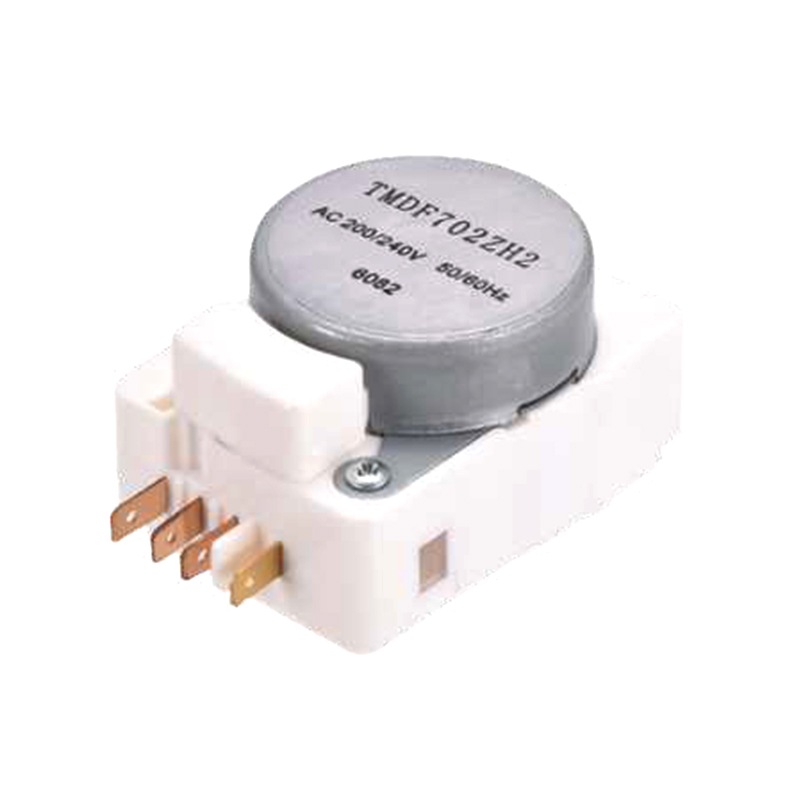
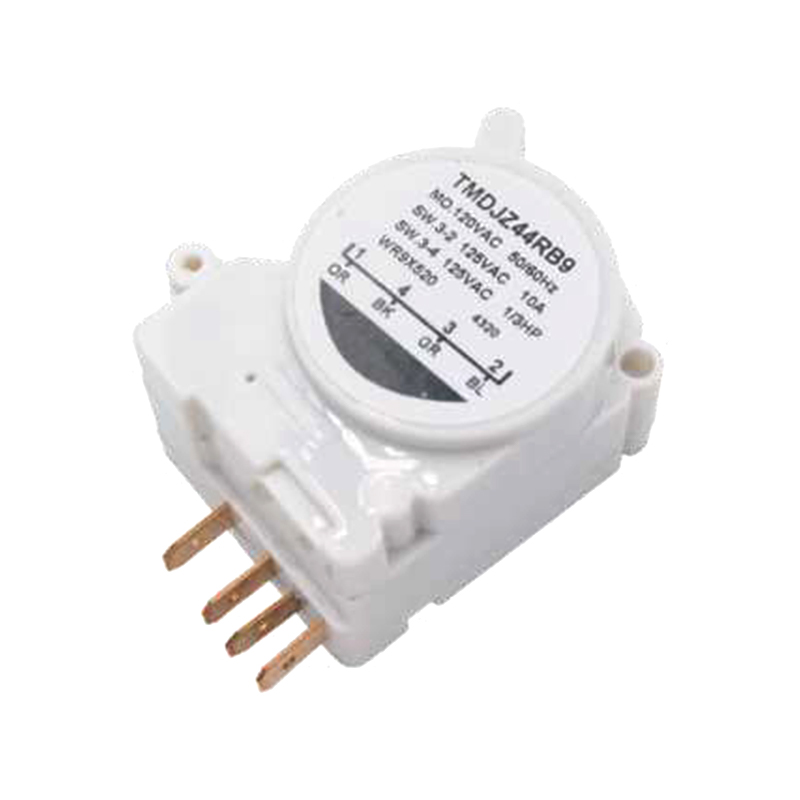
A Defrost Timer is an electrical control device that automatically switches refrigeration equipment between cooling mode and defrost mode on a preset schedule. It tracks compressor runtime, triggers the defrost heater at the right interval, and returns the system to normal cooling once the ice has cleared.
// 02The Defrost Cycle Step by Step
1Compressor and fan run through the normal cooling cycle
2Timer tracks elapsed operating time against a preset threshold
3Compressor shuts down and the defrost heater activates
4System automatically returns to cooling once ice has melted
!
Skipping defrost control entirely does not stop frost from forming — it just removes the mechanism that clears it, so ice keeps accumulating until cooling efficiency drops and energy use climbs.
// 03Mechanical vs Electronic Timers
Mechanical Defrost Timer
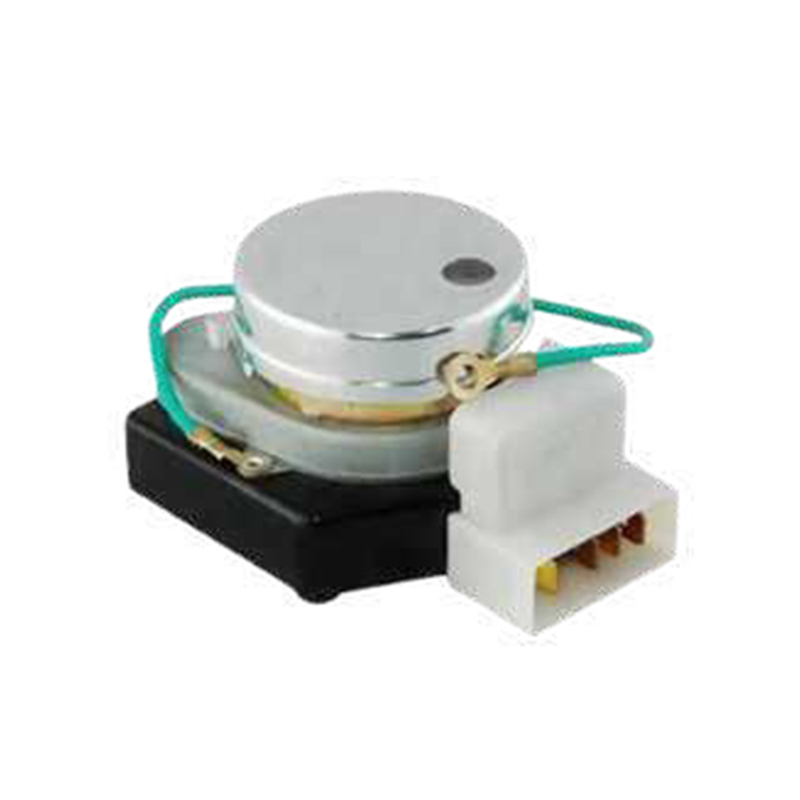
Uses a motor-driven gear mechanism and physical switching contacts. Simple, reliable, and easy to maintain, making it common in household refrigerators and basic freezers.
Electronic Defrost Timer
Uses microcontroller-based digital timing for more accurate, programmable defrost cycles. Common in commercial refrigeration where energy efficiency matters more.
// 04Where Defrost Timers Are Used
Household refrigerators and upright or chest freezers
Commercial display refrigerators and beverage coolers
Cold storage rooms and warehouse cooling systems
HVAC heat pumps managing outdoor coil frost
// 05Materials and Construction
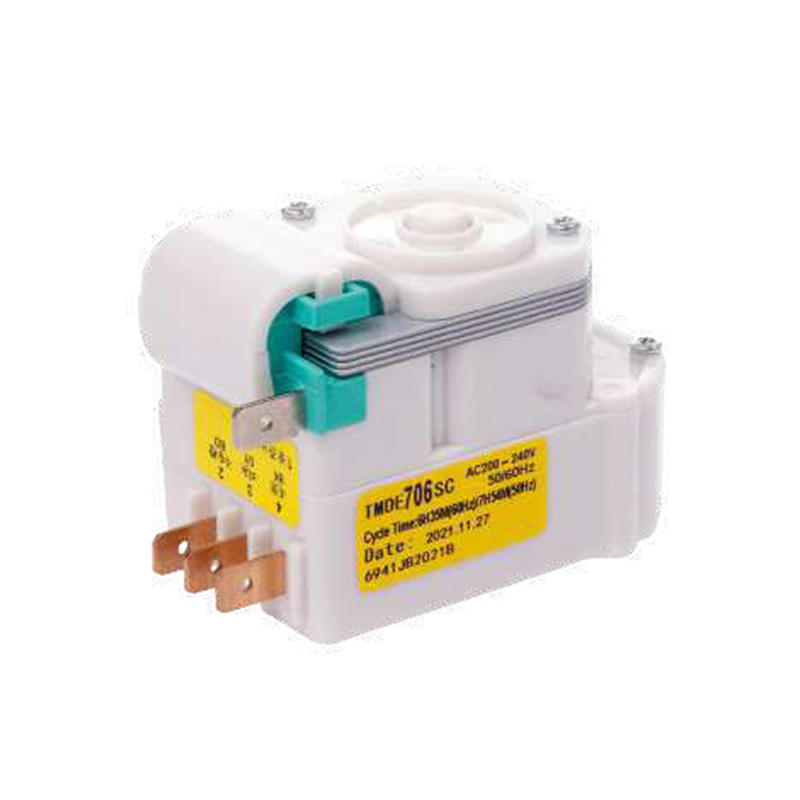
The housing is typically molded from engineering plastic for electrical insulation and dust protection. Inside, a Defrost Timer holds a motor or circuit board, relay contacts, timing gears, and terminals, all rated to withstand repeated switching under compressor and heater loads without contact degradation.
// 06How to Choose the Right Timer
- Confirm voltage, current rating, and cycle specification against the refrigeration system.
- Choose mechanical for simplicity or electronic for programmable precision.
- Check the operating environment: temperature range, humidity, and switching frequency.
- Prioritize contact durability and timing accuracy for long-term reliability.
// 07Defrost Timer vs Defrost Control Board
| Feature | Defrost Timer | Defrost Control Board |
| Control method | Mechanical or simple electronic timing | Microprocessor-based control |
| Operation | Fixed defrost schedule | Intelligent temperature-based control |
| Cost | Generally lower | Generally higher |
| Typical use | Basic refrigeration systems | Advanced refrigeration equipment |
Frequently Asked Questions
How often does a defrost cycle typically run?
Most timers trigger a defrost cycle every six to twelve hours of compressor runtime, though the exact interval depends on the equipment and settings.
What happens if a defrost timer fails?
Ice builds up on the evaporator coil without being cleared, reducing cooling efficiency and eventually blocking airflow across the coil entirely.
Can a mechanical timer be replaced with an electronic one?
In many systems yes, as long as voltage, current rating, and terminal configuration match the original component's specification.
Is a defrost timer the same as a defrost control board?
No. A timer runs on a fixed schedule, while a control board uses sensors and a microprocessor to trigger defrost based on actual frost conditions.
 |
 |
Recommended NEWS:
Defrost Timer: A new perspective on refrigeration equipment efficiency and energy saving
The Ultimate Guide to Home Appliances HVAC Parts: Selection, Maintenance, and Efficiency
Defrost Timer: A Critical Component in Refrigeration Systems
Ningguo Kingcool: Revolutionizing the Market with High-Quality Defrost Timers and Comprehensive Customer Solutions
CBB65-R1: Key Features and Applications of High-Performance AC Capacitors
How does the Defrost Timer perform in different climates? Are there any environmental factors that require special attention?

Efficient charging, stable output, capacitor, thefirst choice for electric drive.
- Address: North of Funing Rd., Helixi Economic and Technology Development Zone, Ningguo, Anhui, China
- Phone/WhatsApp: +86-18110862602
- Email: [email protected]
Subscribe Our Newsletter
If you have anything to consult, you canfollow us, we will contact you as soon aspossible

Copyright © Ningguo Kingcool Import and Export Co., Ltd All Rights Reserved. Custom HVAC Parts & Accessories Suppliers